 Menu
Menu
On this page
Secureframe vs. Vanta: which should you choose?
Choose Vanta when broad integration coverage and a mainstream cloud-SaaS workflow are the deciding factors. Choose Secureframe when guided compliance support, defense-oriented frameworks, or its specific workflow fits better. Both use quote-based pricing, so compare written quotes on the same headcount, frameworks, onboarding scope, contract term, plan gates, and renewal terms.
| Criterion | Secureframe | Vanta |
|---|---|---|
| Best-fit starting point | Multi-framework teams that value hands-on guidance; defense contractors evaluating CMMC through Secureframe Defense | Cloud-native SaaS teams on mainstream stacks that benefit from broader integration coverage |
| Native integrations | 300+ | 400+ |
| Onboarding model | Guided | Guided, with a more self-directed product motion |
| Enterprise administration | SSO and SCIM start at Complete | SSO and RBAC available; SCIM may require an upgrade or add-on |
| Auditor workflow | Audit Module for independent CPA firms | Scoped auditor access and in-platform request lists |
| Pricing disclosure | Quote-only | Quote-only |
Choose Secureframe, Vanta, or neither
- Choose Secureframe when guided support, CMMC or FedRAMP coverage, or its Audit Module is decisive.
- Choose Vanta when its larger integration library matches more of your stack or you want its mainstream SaaS ecosystem.
- Choose neither when both written quotes exceed the value of automation for your scope, a required integration is missing, or you need a bundled implementation model instead of guided software.
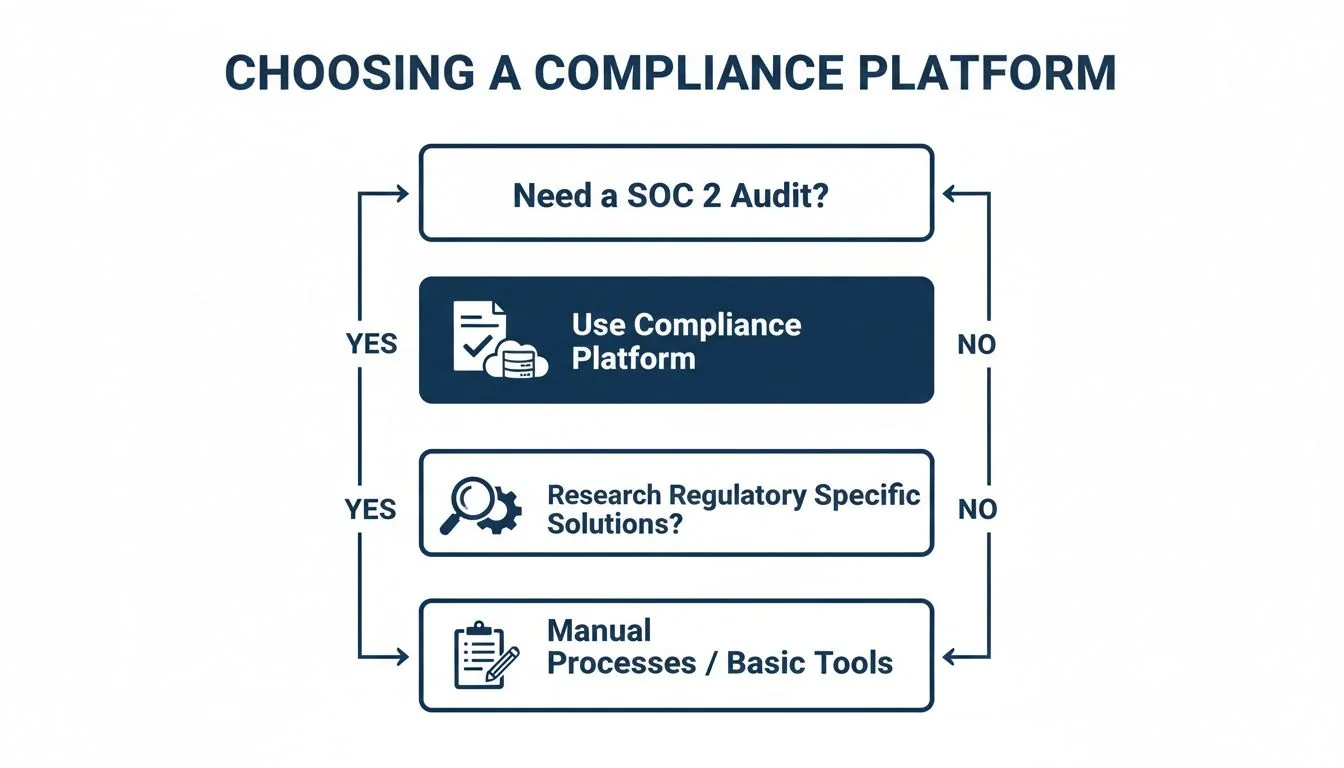
The flowchart assumes you have already decided a compliance platform belongs in your SOC 2 program; it is about which one, not whether.
Feature Deep Dive for Key SOC 2 Controls
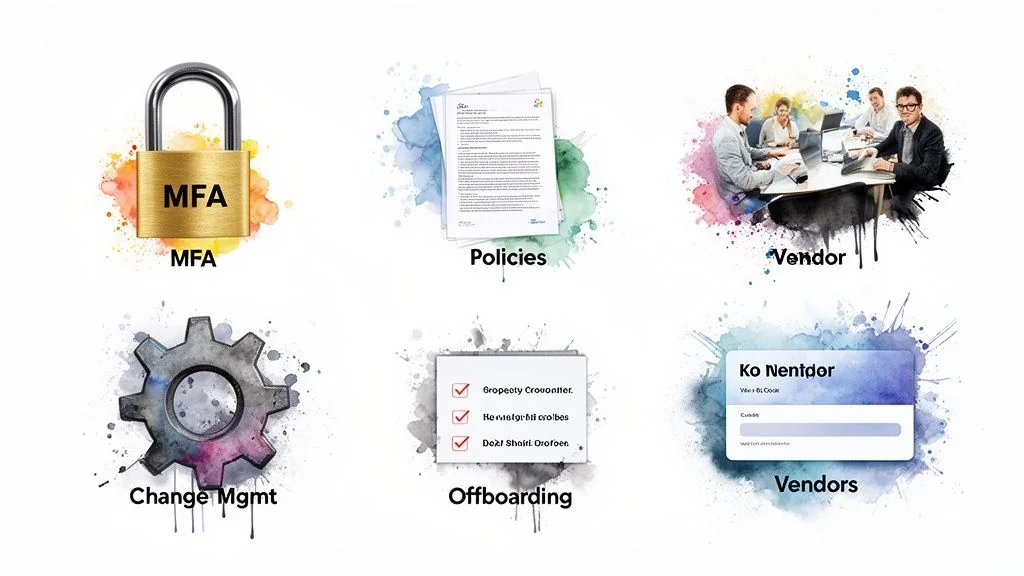
This section looks at how Secureframe and Vanta handle the core functions a SOC 2 audit actually checks: policy templates, continuous monitoring, and integration breadth for evidence collection.
For CC6.1 (logical access), the platform needs to integrate with your cloud provider to continuously verify that MFA is enforced for administrative users. For CC7.2 (change management), it should monitor your code repositories to confirm pull requests require peer review before merging to production. The more reliable that automation is, the less manual work your team has to do to prove controls are operating effectively when an auditor asks. Both platforms also handle supporting processes (security awareness training, CC1.2; vendor risk management, CC9.2; employee offboarding, CC6.2) with real differences in depth that our dedicated Secureframe review covers in more detail. How deeply a platform automates these checks is the main driver of its ROI: it’s the difference between a streamlined audit and a resource-intensive manual project.
Integration and package differences
Vanta’s directory record shows 400+ integrations; Secureframe’s shows 300+. Raw count is only a screening signal. Confirm that each required cloud, identity, HR, device-management, repository, ticketing, and vulnerability tool is supported at the depth you need.
Secureframe packages its product as Fundamentals, Complete, and Defense. Complete adds SSO and SCIM, while Defense targets defense-oriented requirements such as CMMC. Vanta supports SSO and RBAC broadly, while its documentation says SCIM may require an upgrade or add-on without publishing the exact cost. Put every required plan gate into the quote comparison.
Comparing Pricing and Total Cost of Ownership
The financial investment in a compliance platform extends past the subscription fee. Understanding how Secureframe and Vanta price out matters for budgeting the total cost of your SOC 2 program.
Both vendors are quote-only. Third-party procurement observations are estimates, not list prices, and they span different scopes. Request matching quotes that state employee band, frameworks, required integrations, onboarding work, add-ons, contract length, year-one discounts, renewal cap, and the independent CPA examination fee separately. Negotiate renewal terms before signing.
Evaluating User Experience and Support Quality
Platform usability and support quality directly affect whether a SOC 2 program stays on track. A confusing interface or a slow support queue creates friction for the engineering and IT staff responsible for implementing and monitoring controls.
During audit prep, your team will hit real snags: a failing test, a misconfigured integration, a question about how to evidence CC5.1 (risk assessment). How fast and how well you get help through those matters. Secureframe is widely recognized for a clean UI and dedicated, high-touch support from compliance experts, which is valuable for teams without an in-house compliance manager. Vanta offers a mature, polished platform with extensive self-service resources and AI-assisted support built for its much larger user base. Vanta lays out its own view of the comparison at vanta.com/compare/secureframe. In practice, the difference is often between a dedicated compliance contact (Secureframe) and a tiered support system (Vanta), and for a team facing a control failure weeks before an audit, fast access to a real person matters.
How to Choose Your Platform and Prepare for an Audit
The decision between Secureframe and Vanta mostly comes down to two scenarios.
Choose Secureframe if guided support, defense-oriented frameworks, or its workflow is the better match. Do not infer budget certainty from packaging alone; its prices are not public.
Choose Vanta if you run a mainstream cloud stack, plan to add frameworks such as ISO 27001, and its larger published integration count covers more of your systems.
Picking a platform only covers the “buy the tool” half of the job. It automates evidence collection, but it doesn’t perform the audit. The next step is choosing a qualified audit firm: the platform gathers the evidence, and the auditor is the person who tests your controls against the Trust Services Criteria and issues the SOC 2 report your customers will actually read. See our Secureframe auditors and Vanta auditors directories to shortlist firms that already work with each platform.
A good audit outcome doesn’t come from the platform alone. It comes from your team, the platform, and the audit firm working from the same evidence. A proficient auditor uses the data from Vanta or Secureframe to focus on the substance of your controls (the design of your risk assessment process, CC3.1, or the effectiveness of your incident response plan, CC5.2) instead of re-deriving the mechanics of evidence collection. That’s what produces a clean SOC 2 report and, more importantly, a security posture that actually holds up.
Comparing SOC 2 software? See our side-by-side breakdown of all 12 compliance platforms — pricing, best-for, and what each one gets wrong.
Vanta buyer guides
Start with the product record, then compare Vanta's review, pricing, SOC 2 coverage, and alternatives before you shortlist.