 Menu
Menu
On this page
- What Does a SOC 2 Type 2 Audit Actually Cost?
- What Really Drives Your Audit Costs?
- How Does Your Audit Timeline Affect Total Cost?
- What Are the Hidden and Ongoing Costs of SOC 2 Compliance?
- How Can You Reduce Your SOC 2 Audit Expenses Without Cutting Corners?
- How Do You Choose the Right SOC 2 Auditor for Your Budget?
- Frequently asked questions about SOC 2 costs
A SOC 2 Type 2 budget needs two separate numbers: the CPA firm’s audit fee and the cost of operating your controls throughout the observation period. A small SaaS team’s budget can be well below a directory-wide price range, but the scope, reporting period, and excluded services must match the estimate.
What Does a SOC 2 Type 2 Audit Actually Cost?
For a budget-conscious 1–10-person SaaS team with one simple product and Security-only scope, $7,000–$10,000 is a narrow audit-only planning scenario. See the source and assumptions in our startup budget. This is a directory estimate, not a firm-confirmed quote or a typical price for all startups. Agree the observation period and exclusions before treating the range as your budget.

The audit fee excludes any work you must do to establish controls, operate them, and collect evidence unless the proposal explicitly includes it. For current firm-group estimates and their methodology, see the SOC 2 Audit Cost Guide. Use the cost calculator to work through your own scope.
The four cost components
A SOC 2 Type 2 budget falls into four buckets:
- Readiness and remediation — finding control and documentation gaps, then fixing them. Outside help is a separate cost if you need it.
- Auditor fees — the payment to the CPA firm for testing your controls and issuing the report.
- Tools and testing — any compliance platform, security tools, and penetration testing your scope requires. Check what you already have before buying more.
- Internal team time — the hours your engineers, IT, and HR spend implementing controls, gathering evidence, and answering auditor questions.
Why the range is so wide
SOC 2 pricing varies with the systems, people, locations, and controls the auditor must test. Headcount alone cannot tell you the price: two small teams can have very different environments and customer requirements.
Our directory groups firms as assurance specialists, full-service CPA firms, and Big Four firms. The group price bands in the main guide summarize directory estimates, not a sample of accepted buyer quotes. They describe a broader set of engagements than the small-SaaS scenario above.
First-year versus renewal budget
| Cost component | First Type 2 | Later reporting periods |
|---|---|---|
| Readiness and remediation | Establish policies, controls, and evidence ownership; buy outside help if needed. | Maintain controls and address changes or gaps. |
| Auditor fee | Confirm the observation period, fieldwork, and report are included. | Get a separate fee for testing the next period; do not assume a discount. |
| Tools and testing | Check existing coverage before buying subscriptions or testing services. | Budget renewals and any testing due under your controls or customer commitments. |
| Internal work | Implement controls and produce evidence as they operate. | Continue access reviews, vendor reviews, training, and other scheduled controls. |
First-year setup work may not recur, but the ongoing controls still need owners. Keep cash spending separate from internal hours so you can see what actually disappears in year two.
What Really Drives Your Audit Costs?
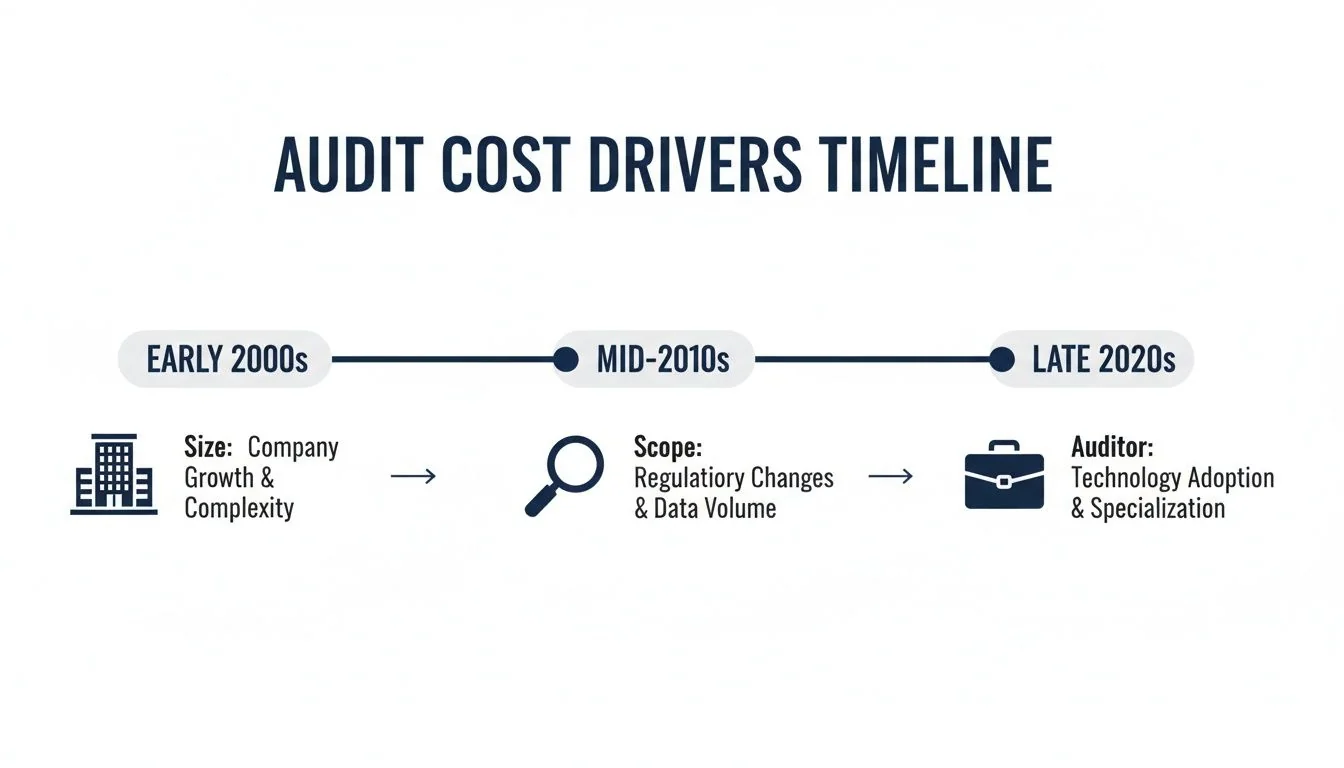
SOC 2 Type 2 pricing depends on your system’s complexity, the Trust Services Criteria in scope, the observation period, and the firm you hire. Ask each firm to price the same scope and period before comparing fees.
Start with the system description and customer requirements. Those determine what work you are asking firms to price.
Company size and complexity
An auditor tests your controls. More systems, people, and locations can mean more evidence to sample and more work to price.
A single cloud-native app and a business with multiple product lines, legacy systems, and several offices present different scopes. More complexity can mean:
- More evidence to sample — user access lists, change management tickets, and configurations multiply with headcount and systems.
- More processes to review — separate development teams or business units each carry workflows that get assessed individually.
- More complex testing — a single AWS account is straightforward; a hybrid environment spanning on-prem servers and multiple cloud providers takes far longer to test.
Scope: which Trust Services Criteria
Scope is the next driver, and it comes down to which of the five Trust Services Criteria (TSC) you include. Security (the Common Criteria) is mandatory for every SOC 2 audit; the other four are optional and each one adds auditor hours:
- Availability: tests business continuity plans, disaster recovery, and system monitoring.
- Confidentiality: examines data encryption, access controls for sensitive information, and data destruction.
- Processing Integrity: focuses on quality assurance, data validation, and error controls.
- Privacy: covers how you collect, use, and protect PII against your privacy notice.
Additional criteria can add controls and testing. Ask for the incremental fee rather than applying a fixed percentage to your budget.
Firm group and engagement team
Firm group is useful context, but it is not a quality score or a like-for-like price comparison. Compare proposals on scope, methodology, team seniority, and whether the intended recipients will accept the report. Ask who will do the testing and who will review it.
How Does Your Audit Timeline Affect Total Cost?
A first SOC 2 Type 2 project involves preparation, a stated observation period, and audit fieldwork and reporting. Preparation may be your own work or a separate engagement. Agree the observation dates and delivery date separately: the end of the observation period is not the date you receive the report.
A Type 2 audit runs as a multi-stage project. A delay can push back the report and add internal work, even when the auditor’s fixed fee stays the same.
The three audit phases
A first Type 2 project has three stages to budget for; they need not all be purchased from the auditor:
- Readiness: find and fix control weaknesses before the period you want the report to cover. The work depends on your starting point.
- Observation period: your team operates controls and retains evidence for the agreed dates. The auditor tests that evidence; they are not continuously watching your systems.
- Fieldwork and reporting: the auditor completes testing and prepares the report. Ask which work can overlap the observation period and what remains after it closes.
How the observation window drives the bill
The observation period matters because evidence must support how controls operated throughout it. Sampling depends on factors such as control frequency, risk, and the population of events, not just the number of months. Do not assume that doubling the period doubles the samples or the fee.
Ask the auditor to price the period your customers need. A shorter initial period may suit a first report, but confirm buyer acceptance before choosing it for cost reasons. See SOC 2 Type 1 vs Type 2 for the point-in-time versus period distinction.
If readiness work finds gaps, agree whether the observation start must move and what that does to the fee. Organized evidence can reduce back-and-forth; it cannot replace operating controls for the agreed period.
What Are the Hidden and Ongoing Costs of SOC 2 Compliance?
Beyond the auditor’s fee, budget for any compliance software, security tools, testing, and internal work needed to operate your controls. Some first-year setup work may not recur. Evidence collection, reviews, training, and testing continue according to your control schedule.

Read the proposal’s inclusions before adding other services to your budget. A bundled fee may cover some readiness or testing; an audit-only fee may cover neither. Count each item once.
Upfront costs beyond the audit fee
Before fieldwork, check whether your budget needs to cover:
- Remediation: Fixing gaps may mean deploying a security tool, rewriting a policy, or changing a system. Price the identified work rather than adding an arbitrary contingency percentage.
- Penetration testing: Agree the testing scope, timing, and evidence with your auditor and customers. Ask whether retesting is included in the testing provider’s fee.
- Compliance automation software: A platform may help collect evidence, but it is not a prerequisite for a SOC 2 report. Compare its subscription and setup work against the manual tasks it can actually replace.
Assign an owner to each recurring control and evidence request. That makes internal work visible instead of leaving it as an uncosted task for engineering.
Plan for recurring reporting costs
Many customers expect annual Type 2 reports. The report itself does not automatically expire after 12 months: it covers a stated historical period. Agree the reporting cadence with recipients, and budget for testing each new period rather than treating the first report as a one-time purchase.
Hidden and ongoing SOC 2 program costs
| Expense | What to check before renewal |
|---|---|
| Audit | Does the fee cover the next observation period and the same scope? What changes trigger extra charges? |
| Compliance platform | What are the renewal price, seat limits, framework limits, and cancellation terms? |
| Security tools | Which tools are needed for your controls, and which are already in the operating budget? |
| Penetration testing | When is the next test due, what systems are covered, and is retesting included? |
| Employee training | Are new-hire and recurring training covered by existing subscriptions? |
| Internal work | Who owns evidence management, access reviews, vendor assessments, and auditor requests? |
Staying with the same auditor can reduce repeated onboarding, but it does not guarantee a lower fee. A new product, acquisition, additional criteria, or a longer reporting period can change the renewal scope.
How Can You Reduce Your SOC 2 Audit Expenses Without Cutting Corners?
To control Type 2 costs, confirm the scope customers need, address readiness gaps before the observation period, and agree how evidence will be collected. Ask for first-year and renewal fees in writing, including any charges for delays, scope changes, and retesting.

Start with scope and readiness, then compare evidence-collection options and contract terms. Savings depend on your starting point and the proposal; none of these steps guarantees a fixed discount.
Right-size your audit scope
Including criteria you do not need can add testing and evidence work.
Start with the mandatory Security criterion. Then ask your sales team and key customers what else is required to close deals. Add Availability or Confidentiality in response to actual buyer demand, not as a precaution that adds fees you cannot justify.
Run a readiness assessment first
A readiness review helps find control gaps and missing documentation before the period you want audited. A gap discovered during fieldwork may require more evidence, remediation, or a revised timetable. Ask whether you need a paid assessment or can complete the review with your existing team.
Our SOC 2 readiness assessment guide explains what to check. Do not assume that buying an assessment guarantees savings or a clean report.
Automate evidence collection
Before buying an automation platform, check whether it can:
- Monitor the configurations relevant to your controls.
- Collect evidence from the systems you use.
- Give your auditor evidence in an accepted format.
Some controls still require human decisions and records. Ask the auditor which automated evidence they accept and whether using the platform changes their fee. Compare that answer with the subscription cost and the work your team would still own.
Negotiate multi-year renewal agreements
Ask for first-year and renewal fees separately, with the same scope and observation period stated. A multi-year agreement may offer price certainty, but compare its total committed cost with annual quotes before signing.
Check annual price increases, headcount or system limits, scope-change charges, payment milestones, and exit terms. Confirm what happens if your report is delayed or your customers request a different period. A discount is useful only if the contract still fits the work you need.
How Do You Choose the Right SOC 2 Auditor for Your Budget?
Compare auditors on the same Type 2 scope, observation dates, and deliverables. Check report-recipient acceptance, industry experience, evidence methodology, and the people doing the work alongside the fee.
Consider assurance specialists and full-service CPA firms as well as Big Four firms. The group label does not tell you who will staff the engagement or whether the proposal fits your needs.
Check whether you need a particular firm
Ask the intended report recipients whether they require a particular firm or need to approve your choice. If they do not, compare qualified firms on their experience with your systems and scope rather than assuming a larger brand is necessary.
Treat the decision as a potential multi-year working relationship. Ask how the team handles evidence questions, control changes during the period, and renewal planning.
Running an effective selection process
Run a request-for-proposal (RFP) process with three to five firms so you compare like for like instead of taking the first name in a search. When proposals arrive, look past the lowest number and ask:
- Industry experience: Have they audited companies like yours? Ask for client examples in your niche — SaaS, FinTech, or HealthTech.
- Audit methodology: How do they collect evidence? Manual spreadsheets, or modern compliance automation?
- Team composition: Who does the actual work — seasoned auditors, or junior staff learning on your engagement?
Also confirm the firm is properly licensed and qualified: see SOC 2 auditor requirements. Request a written fee and a list of exclusions before making your choice.
Frequently asked questions about SOC 2 costs
How much does a SOC 2 Type 2 audit cost in 2026?
The audit fee depends on your scope, observation period, and firm. Separate that fee from readiness, tools, testing, and internal work. Our main SOC 2 Audit Cost Guide provides a narrow small-SaaS planning scenario and broader directory estimates; neither is a firm-confirmed quote for your engagement.
Is a SOC 2 Type 1 audit cheaper than a Type 2?
Usually, for the same scope. A Type 1 examines control design at a point in time; a Type 2 also tests operating effectiveness over a stated period. There is no universal percentage premium. Ask for like-for-like proposals and whether your buyer will accept a Type 1.
Do compliance automation tools replace an auditor?
No. Compliance software can organize evidence and automate some collection and monitoring. An independent, licensed CPA firm must issue the SOC 2 report. Software does not guarantee a lower audit fee; confirm which integrations and evidence formats the auditor accepts.
How often do you need to renew a SOC 2 report?
Many customers expect annual Type 2 reports, but a SOC 2 report does not automatically expire after 12 months: it covers a stated historical period. Agree the reporting cadence with report recipients. Each new period needs testing, and staying with the same auditor does not guarantee a renewal discount.
Compare SOC 2 firms by scope, pricing provenance, and experience. Find your SOC 2 auditor.
Start here: What is a SOC 2 Type 2 report? — the full explainer on what a Type 2 is, how the observation period works, and what auditors actually test.
Full audit cost breakdown: Planning scenarios, directory estimates, and what to include in your budget. SOC 2 Audit Cost Guide.