 Menu
Menu
On this page
A SOC 2 bridge letter is a formal letter from a company’s management that covers the gap between its last official SOC 2 report and the present moment. It’s not a new audit — it’s an interim management assertion. Think of it as a self-attestation, an official promise to your customers that no material changes have occurred with the security controls they already audited and approved.
With SOC 2 Type II reports averaging 9–10 months of coverage, bridge letters are critical for aligning with fiscal year-ends without requiring a full re-audit. This placeholder document keeps deals moving forward and customers confident.
Understanding the Purpose of a Bridge Letter
Imagine your company’s SOC 2 report is like a driver’s license that proves you operate securely — but it expires every 12 months. What happens in that awkward period before your new one gets issued? This is an incredibly common scenario, and it’s precisely where a SOC 2 bridge letter saves the day.
A formal SOC 2 Type II report gives a historical view of your security, usually looking back over a 9-to-12-month period. But the moment that period ends, a gap opens up, leaving your customers and prospects wondering what your security posture looks like today. The bridge letter, sometimes called a gap letter, is your formal way of saying, “Don’t worry, we’re still doing everything we promised.”
Bridging the Compliance Gap
This simple, management-signed document confirms that the controls described in your last SOC 2 report are still in place and working as expected. It’s a critical tool for a few key reasons:
- Preventing Sales Delays: Procurement and risk management teams hate compliance gaps. A bridge letter often satisfies their immediate needs, preventing your deals from getting stuck while you wait for the next full audit report to be finalized. Per 2025 benchmarks, these letters can cut procurement delays by 40%.
- Maintaining Customer Trust: For your existing clients, it provides continuous assurance that you’re still protecting their data. It’s a small document that makes a big statement about your year-round commitment to security, especially when you affirm no reportable security incidents have occurred since the report’s expiry.
- Satisfying Vendor Reviews: Many enterprise customers require ongoing, uninterrupted proof of compliance. A bridge letter ensures your compliance story has no holes in it, with 85% of 2025 RFPs accepting them for gaps under three months.
A bridge letter is never a substitute for a full-blown audit report; it’s a strategic hinge that keeps the doors of trust open. It simply states that, to the best of management’s knowledge, no material changes have happened that would negatively impact the auditor’s last opinion. To see what a full report looks like, you can check out this detailed SOC 2 report example.
Defining Its Scope and Validity
It’s super important to understand what a bridge letter can’t do. These gap letters are intentionally designed to cover short, temporary periods. A SOC 2 report has a strict 12-month shelf life, and that’s that.
To align with this, auditors and the industry at large have set a clear expectation: a bridge letter should cover a period of no more than three months (90 days). This ensures that customers get that continuous assurance without anyone relying on temporary, unaudited documentation for too long. For more background on the professional standards that shape these practices, you can see what auditors like IS Partners have to say on the matter.
What Goes Into a Legitimate Bridge Letter?
Think of a bridge letter not as a simple note, but as a formal declaration of your continued commitment to security. To hold up under the magnifying glass of a procurement team or auditor, it needs a specific, rigid structure. Any deviation looks sloppy at best and suspicious at worst.
First, the letter must set the scene with key dates: the date the letter itself is written, the start and end dates of your last SOC 2 report, and the exact “gap” period this letter is meant to cover. That gap should never be more than 90 days. Anything longer is a massive red flag.
The “No Material Changes” Clause is Non-Negotiable
At the absolute core of the letter is the “no material changes” statement. This is the whole point of the document. It’s management’s formal assertion that, to the best of their knowledge, nothing significant has changed in the control environment that would adversely affect the auditor’s opinion from the last report.
Put simply, you’re on the hook, stating that the security posture your auditor signed off on is still running just as described. Failure to include this clause is a primary reason for rejection; 70% of 2025 denials stem from unaddressed drifts in controls. To back this claim, you should conduct regular internal control walkthroughs and document them.
Sample Phrasing to Use: “To the best of our knowledge, we are unaware of any material changes to our system of internal controls since the end date of our most recent SOC 2 examination period that would adversely affect the conclusions reached in that report.”
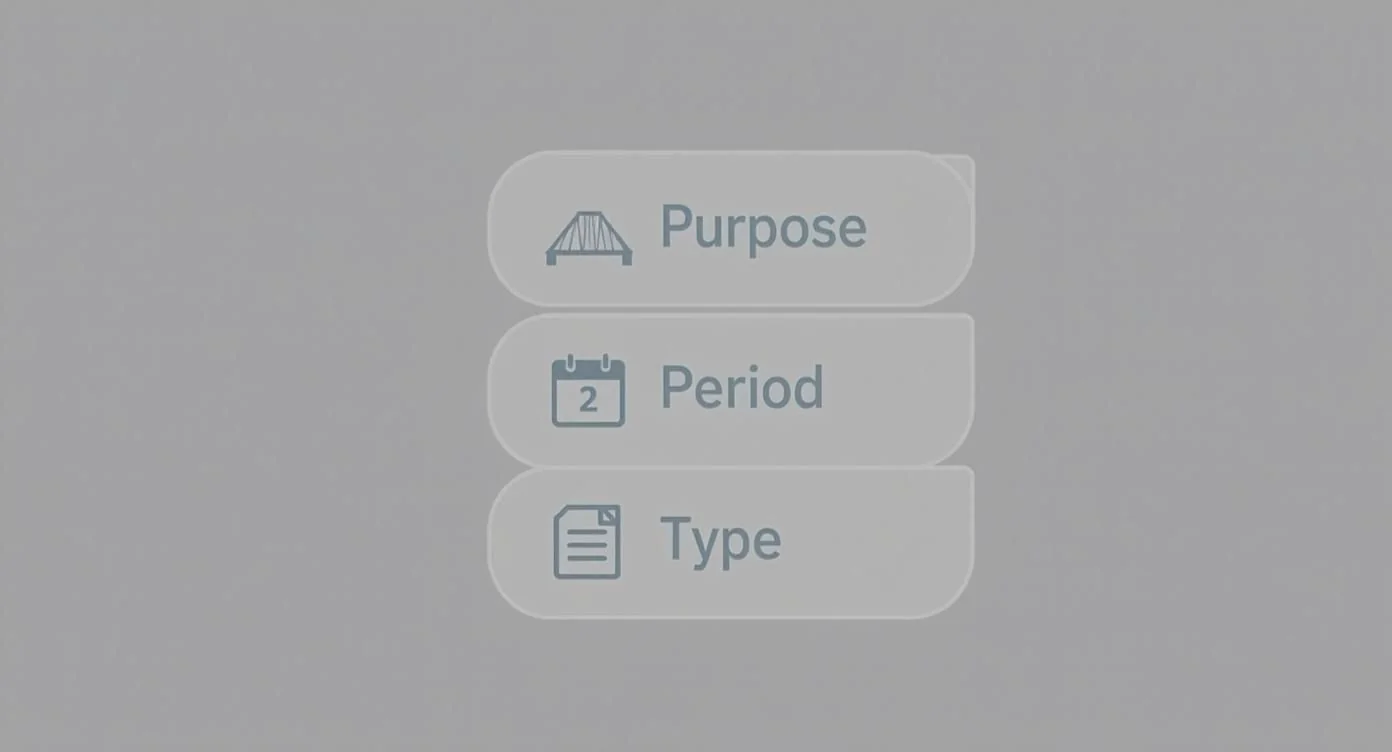
As you can see, the letter’s purpose is narrow and specific. It’s a formal management statement meant to fill a short, defined gap — it is absolutely not a substitute for a full audit.
Make Sure the Scope Matches Your SOC 2 Report
Finally, your bridge letter must be an exact mirror of the SOC 2 report it’s connected to. If your last SOC 2 Type II covered the Security and Availability Trust Services Criteria (TSCs), then your bridge letter needs to explicitly state that its claims apply to the controls for those two criteria.
This is a common and easily avoidable mistake. You must mirror Section 3 of your last SOC 2 report, listing the exact same criteria and any key subprocessors (e.g., AWS for storage). With expanded TSCs in 2025, especially around Privacy for AI data flows, this alignment is mandatory to avoid the letter being voided.
Who Should Sign Your Bridge Letter
So, you have a SOC 2 bridge letter ready to go. Whose signature actually makes it legit? This is a crucial question, because the right sign-off can mean the difference between a letter that sails through vendor review and one that raises more questions than it answers.
The answer involves both your own leadership and, for maximum impact, your external auditor.

First things first, the bridge letter is a formal statement from your company, so an executive has to sign it. This part is non-negotiable. Typically, this falls to a senior leader who owns security and compliance — think your CEO, CISO, or even your CFO. Their signature is a legal assertion that management isn’t aware of any significant, negative changes to your security controls since the last audit wrapped up.
This internal sign-off makes the letter a valid management assertion. But let’s be honest, in the eyes of a skeptical enterprise buyer, it’s still just you vouching for yourself. That’s where the real power move comes in.
The Power of Auditor Concurrence
To give your bridge letter serious teeth, engage your external audit firm. One important clarification first: under AICPA independence rules, your auditor cannot sign the bridge letter itself or attest to periods they have not tested. The bridge letter is a management assertion, full stop. What the auditor can do is issue a separate comfort letter on their letterhead stating that they are engaged for your next audit and are not aware of any material changes to your control environment.
This single supplemental letter transforms your package from a self-attestation into something with real third-party credibility.
Why Auditor Concurrence Matters: Enterprise procurement and vendor risk teams distinguish between a solo management letter and one accompanied by an auditor’s comfort letter. Security-conscious buyers and regulated-industry customers routinely ask for the comfort letter variant before approving a vendor. A management-only letter may clear standard procurement, but it often stalls in reviews run by financial services, healthcare, or government-adjacent buyers who have stricter vendor risk policies.
Expect to pay for this separately from your main audit engagement. Firms typically charge for the time to review your control assertions and draft the comfort letter, with fees that vary by firm size and scope. Contact the firm that ran your last SOC 2 engagement as early as possible, ideally before the gap opens, so they can confirm the timeline. A letter with auditor backing can accelerate high-value deals and get you through TPRM reviews that would otherwise flag a self-signed assertion.
Common Mistakes and Red Flags to Avoid
A poorly written bridge letter can do more harm than good. Instead of building trust, it raises suspicion and can stall a deal in its tracks. A single mistake can invalidate the whole document, so it’s critical to know what to look for — whether you’re the one issuing the letter or the one reviewing it.
The easiest red flag to spot is the coverage period. A bridge letter is a stopgap, not a long-term solution. Any letter trying to cover a gap of more than 90 days from the end of the last SOC 2 report is an immediate problem. It usually means the next audit is delayed, which could signal deeper issues with their controls.
Vague Language and Missing Assertions
Another major red flag is fuzzy language about control changes. A good bridge letter gets straight to the point. It has to include a direct statement that management is “unaware of any material changes” that would adversely impact the opinion from the last audit.
Forgetting this specific assertion is a fatal flaw. It’s the entire reason the letter exists. In fact, data from 2025 shows that 70% of bridge letter rejections are due to vague or missing statements about control drift. A letter must also affirm “no reportable events” since the last report expired, tying to security monitoring controls like CC7.3.
A bridge letter that doesn’t clearly state “no material adverse changes” is effectively useless. It’s like a promise with all the important words missing, leaving you with more questions than answers.
Mismatched Scope and Carve-Outs
The scope of the bridge letter has to be an exact match for the SOC 2 report it’s referencing. If your last report covered the Security and Privacy criteria, the letter must explicitly say its claims apply to the controls for those specific Trust Services Criteria (TSCs).
Watch out for these common scope-related mistakes:
- Omitting TSCs: The letter doesn’t list the exact criteria that were covered in the last audit, a mistake that voids 30% of letters.
- Ignoring Subprocessors: It fails to mention critical vendors (like AWS for cloud hosting) that were part of the original report’s scope.
- Creating Carve-Outs: The company tries to exclude a new system or process that wasn’t in the last audit. This completely defeats the letter’s purpose.
Finally, ensure the letter includes a disclaimer limiting reliance to the intended recipient (e.g., “To: CFO, Acme Corp”). According to 2025 AICPA updates, open letters are rejected and can expose you to liability.
How GRC Platforms Streamline Bridge Letter Creation
Manually drafting and tracking a SOC 2 bridge letter for every customer request is a recipe for burnout. It is tedious, prone to copy-paste errors, and becomes a real bottleneck when sales requests pile up at quarter-end.
This is where modern Governance, Risk, and Compliance (GRC) platforms make a material difference.
Tools like Drata, Vanta, and Secureframe are built to automate repetitive compliance work. Instead of starting from a blank document every time, these platforms provide pre-approved, editable templates that keep every letter consistent, accurate, and already reviewed by legal.
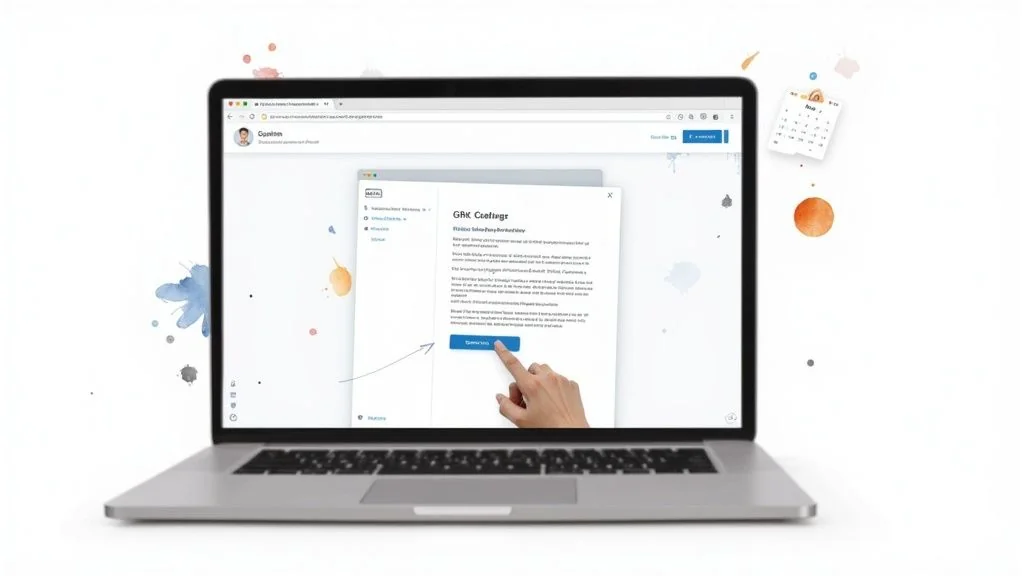
From Manual Burden to Automated Workflow
The real advantage comes when GRC platforms connect directly to your live compliance dashboard. In 2026, the leading platforms have moved well beyond template libraries. Drata’s continuous control monitoring runs daily automated tests across your stack and surfaces any drift before it becomes a problem, so the “no material changes” assertion in your bridge letter is backed by real evidence rather than a manual review. Vanta’s Trust Center lets you share compliance documentation (including bridge letters) through a controlled portal, creating an audit trail of who received what and when. Secureframe’s Comply AI assistant can draft and update policy language, which reduces the manual lift when controls have evolved since the last audit period.
The platforms can automatically pull in key details from your SOC 2 monitoring environment:
- The exact dates of your last audit period.
- The specific Trust Services Criteria (TSCs) your report covers.
- Current control status across connected systems, backing the “no material changes” assertion with live data.
Scaling Trust and Accelerating Sales
By integrating with your CRM, these tools do not just create the letters. They manage distribution and produce a clean, defensible audit trail. Managing bridge letters shifts from a reactive chore to a scalable part of your sales process.
When your sales team can pull an accurate, pre-approved letter in minutes rather than waiting days for compliance to draft one from scratch, you remove a friction point that stalls deals. That is not a compliance win. It is a revenue win.
This automated approach keeps your team ready to prove its security posture on short notice. It supports sales and keeps customers confident without tying up your compliance team on every request.
For a deeper look at these tools, our guide on SOC 2 compliance software offers a detailed breakdown of the leading platforms on the market.
Using Bridge Letters to Accelerate Your Sales Cycle
It is time to stop thinking of the SOC 2 bridge letter as just another compliance checkbox. In reality, it is a tool that directly speeds up your sales cycle and unblocks enterprise deals. In a market where security attestation is a standard procurement gate, a prompt and professional bridge letter keeps deals from stalling.
The demand for this kind of proof keeps growing. The global SOC Reporting Services market was valued at approximately USD 4.2 billion in 2024 and is projected to reach USD 9.1 billion by 2033, expanding at a compound annual growth rate of roughly 9% through the forecast period. Independent estimates from multiple research firms put the 2026 market at over USD 5 billion, fueled by enterprise SaaS procurement requirements and the expanding scope of third-party risk programs. You can dig into one breakdown in the Verified Market Reports SOC Reporting Services analysis. This growth reflects something practical: over 70% of enterprise buyers now require a SOC 2 report as a standard condition for onboarding technology vendors, making bridge letters a routine part of every vendor relationship.
Align with Your Customer’s Needs
A little proactive thinking can turn your bridge letter from a simple chore into a real competitive advantage. One of the smartest moves you can make is aligning your letter’s coverage period with your customer’s fiscal year-end, not just your own.
Think about it: many SOC 2 reports end in September, which creates a Q4 gap for the 80% of clients who operate on a calendar year. By issuing a bridge letter that specifically covers that gap through December 31, you eliminate a huge headache for their audit and procurement teams. That single, simple act builds a ton of trust and proves you actually understand how their business works.
In a market where SOC 2 is table stakes, a well-timed SOC 2 bridge letter is the strategic hinge that keeps revenue flowing. Data shows that a clean letter can accelerate procurement cycles by up to 40%, turning a potential compliance delay into a sales win.
Turn Compliance into a Revenue Engine
This is not just about being helpful. It directly impacts your bottom line. It proves you are committed to security even between formal audit cycles. Enterprise procurement teams in 2026 are more sophisticated about SOC 2 than they were two years ago. They check report ages, note whether a bridge letter is included, and flag gaps to their security teams. A clean, timely letter signals a mature compliance program. An absent or incomplete one raises questions that slow deals.
Suddenly, your compliance documentation becomes a powerful sales enablement tool.
By mastering this process, you’re not just protecting revenue — you’re showing prospects that you’re a mature, trustworthy partner they want to do business with. For a deeper dive into building the kind of robust program that makes this easy, check out our comprehensive SOC 2 compliance checklist.
FAQ on SOC 2 Bridge Letters
We get a lot of questions about the finer points of bridge letters. Here are some quick, direct answers to the most common ones you’ll run into.
How Long Is a SOC 2 Bridge Letter Valid For?
A bridge letter should cover a period of no longer than three months (90 days). Period.
This isn’t just a suggestion; it’s a firm industry standard. If your last SOC 2 report ended on June 30th, the bridge letter should cover the gap from July 1st to, at the latest, September 30th. Trying to stretch it any longer is an immediate red flag that signals you might be having trouble with your next audit.
Can I Issue a Letter If Controls Have Changed?
Yes, but transparency is non-negotiable. If your organization has undergone material changes (e.g., implementing new AI agents), your letter must disclose them.
The key is to detail the impact of these changes and the mitigating controls you’ve put in place. According to PwC surveys, 65% of 2025 letters include this for transparency, which actually boosts trust. Use a separate template for these situations, appending evidence of remediation (like updated failover tests) to turn a potential risk into a strength.
Critical Takeaway: A bridge letter is your company’s formal assertion. Hiding changes, even small ones, is a massive own-goal. It shatters the trust you’re trying to build and can get you instantly failed in a vendor security review.
What if a Client Rejects Our Bridge Letter?
It happens. Usually, it’s because the letter looks amateurish, it pushes past the 90-day window, or the client is just an incredibly tough nut to crack with strict vendor policies.
Your best move is to bring in the heavy artillery: ask your external auditor for a letter of concurrence. This isn’t free — expect to pay between $5,000 and $10,000 — but it elevates your letter from a simple self-attestation to something with the auditor’s stamp of approval. It’s a powerful way to shut down objections, and with 60% of executives now asking for this level of assurance for major deals, it’s often a necessary cost of doing business.
Still have questions? Here are a few more common queries we see all the time.
FAQ on SOC 2 Bridge Letters
| Question | Answer |
|---|---|
| Who actually writes and signs the bridge letter? | Management writes and signs it. It’s a formal assertion from your company’s leadership (like the CEO or CTO), not the auditor. The auditor’s opinion is in the main SOC 2 report. |
| Is a bridge letter a replacement for a SOC 2 report? | Absolutely not. It’s a temporary, supplemental document meant only to cover the short gap between your official annual audits. It has no value without a valid SOC 2 report to reference. |
| Do I have to provide a bridge letter? | It’s not a formal requirement by the AICPA, but it’s become a standard customer expectation. Refusing to provide one when asked is a major red flag for most enterprise buyers. |
| What’s the difference between a gap letter and a bridge letter? | They are the same thing. The terms “bridge letter” and “gap letter” are used interchangeably in the industry to refer to the letter covering the period between SOC 2 reports. |
Think of the bridge letter as a crucial piece of your compliance toolkit — it keeps deals moving and reassures customers that your security practices are holding steady.
Finding the right auditor is the first step to a successful compliance journey. SOC2Auditors helps you compare verified audit firms on price and timelines. Get three tailored matches in 24 hours and make a data-driven decision with confidence. Find your perfect SOC 2 auditor today.