 Menu
Menu
A SOC 2 audit can cost anywhere from $5,000 to over $100,000, but that number doesn’t tell the whole story. For most small to mid-size companies, the audit fee itself will land somewhere between $15,000 and $60,000.
But here’s the reality check: that’s just the sticker price. The total investment is often much higher once you factor in the prep work, necessary tools, and your team’s time.
For interactive cost estimation and a full pricing breakdown, use our SOC 2 Audit Cost Guide.
Breaking Down Your Total SOC 2 Investment
Thinking about “how much a SOC 2 audit costs” is a bit like buying a house. The list price is just the starting point. It doesn’t include the inspection, closing costs, or the new furniture you’ll inevitably need. In the same way, the quote you get from a CPA firm is just one piece of a much larger financial puzzle.
Your real, “all-in” cost for SOC 2 has several moving parts that go way beyond the auditor’s invoice. Getting a handle on these from the start will save you from major budget surprises down the road.
The Sticker Price vs. The Total Cost
The sticker price is the fee an audit firm charges to perform the audit and issue your final report. It’s the most obvious expense. The total cost, however, includes everything you have to spend to actually get compliant and stay that way.
Here’s what that really means:
- Readiness Assessment: Before you even talk to an auditor, you need to find and fix the gaps in your security controls. This might involve hiring consultants or dedicating a big chunk of your internal team’s time.
- Compliance Tools: Modern compliance runs on automation. Platforms like Vanta or Drata save hundreds of hours on evidence collection, but they come with a recurring software cost.
- Remediation: Fixing the security gaps you find often means buying new tools, upgrading software, or pulling engineering resources off product development.
- Internal Time: This is the big one everyone underestimates. The hours your engineers, IT staff, and managers pour into meetings, documentation, and evidence gathering is a massive hidden cost.
The formal audit proposal you sign might only represent 30–60% of your actual first-year cash outlay. It’s incredibly common for companies to underestimate their total spend by a factor of two or three because they forget about the costs of preparation, tooling, and internal effort.
To give you a clearer picture, let’s look at the typical costs for a small to mid-size company going through the process for the first time.
SOC 2 Audit Cost At-a-Glance
This table breaks down the audit fee versus the complete, all-in investment required to achieve and maintain SOC 2 compliance.
| Expense Category | Typical Cost Range (Small to Mid-Size Company) |
|---|---|
| Audit Fee (Sticker Price) | $15,000 – $60,000 |
| Readiness Assessment/Consulting | $5,000 – $25,000 |
| Compliance Automation Software | $5,000 – $30,000 (Annually) |
| Remediation (New Tools, Pen Tests) | $5,000 – $50,000+ |
| Total All-In Investment (Year 1) | $30,000 – $150,000+ |
As you can see, the gap between the audit fee and the real cost is significant.
Understanding the Market Rate
So, what should you really budget? Industry data shows a full SOC 2 compliance program, including readiness and tools, typically ranges from $30,000 to over $150,000. Small SaaS companies often land in the $30,000–$50,000 range, while larger or more complex businesses can easily top $100,000 once all is said and done.
This is why just comparing audit quotes isn’t enough. You have to plan for the entire investment to avoid running into financial trouble mid-project. You can explore more detailed pricing breakdowns from sources that analyze this exact financial gap.
The 7 Key Factors That Drive Your SOC 2 Audit Price
Trying to get a straight answer on “how much does a SOC 2 audit cost?” can feel impossible. That’s because there’s no single price tag. Every audit is a unique project, and the final quote depends entirely on the complexity and effort your company requires.
Think of it like building a house. A simple blueprint with basic materials will have a very different price than a sprawling custom home with high-end finishes. Your SOC 2 audit is the same—the final cost is shaped by the choices you make and the state of your current “foundation.”
Let’s break down the seven key factors that directly influence your audit bill. Understanding these will help you anticipate your real costs and have much smarter conversations with potential auditors.
1. Type 1 vs. Type 2 Report
This is the single biggest fork in the road for your budget. A Type 1 report is just a “point-in-time” snapshot. The auditor looks at your security controls on a specific day and verifies that they are designed correctly. It’s faster and cheaper because it’s a quick look under the hood.
A Type 2 report is the real deal. It evaluates if your controls have been operating effectively over a period of time, usually for 6-12 months. This requires way more work, as the auditor has to dig through months of evidence to prove your controls actually worked day in and day out. Because of that extended testing, a Type 2 audit will almost always cost 50-75% more than a Type 1.
2. Scope of Trust Services Criteria
SOC 2 is built on five pillars called the Trust Services Criteria (TSCs). Each one you add to your audit increases the scope, and therefore, the price.
- Security: This one is non-negotiable. It’s the foundation of every SOC 2 report.
- Availability: Proves your systems are up and running as promised.
- Processing Integrity: Confirms your system processing is complete, valid, and accurate.
- Confidentiality: Covers how you protect sensitive data that’s been designated as confidential.
- Privacy: Focuses on the collection, use, and disposal of personal information.
Adding more TSCs means adding dozens of new controls to be designed, implemented, and tested by the auditor. For instance, throwing Availability and Confidentiality into the mix can easily bump up your evidence requirements and audit fees by 20-30% compared to a Security-only audit.
3. Company Size and System Complexity
It’s simple math: a bigger, more complex company means a bigger, more expensive audit. More employees? That’s more user access controls to test. A tangled tech stack with multiple cloud environments, old legacy systems, and tons of third-party tools? That dramatically expands the surface area the auditor has to cover.
Your auditor will want to know:
- How many employees do you have?
- How many systems, applications, and databases are in scope?
- What does your infrastructure and data flow look like?
A 20-person startup running on a single AWS environment will pay a fraction of what a 500-person company with a hybrid-cloud setup and dozens of microservices will be quoted.
4. Your Current Security Maturity
How ready you are for the audit is a massive cost driver. If you walk in with well-documented policies, established controls, and a team that already lives and breathes compliance, the auditor’s job is a breeze.
But if you’re starting from ground zero with no formal controls, expect the price to go up. The auditor will have to spend more time just figuring out your environment, and they’ll likely find more issues that you’ll have to fix and they’ll have to re-test. All that back-and-forth adds hours, and hours add dollars.
This infographic really highlights the gap between the auditor’s fee and the total investment you’ll need to make.
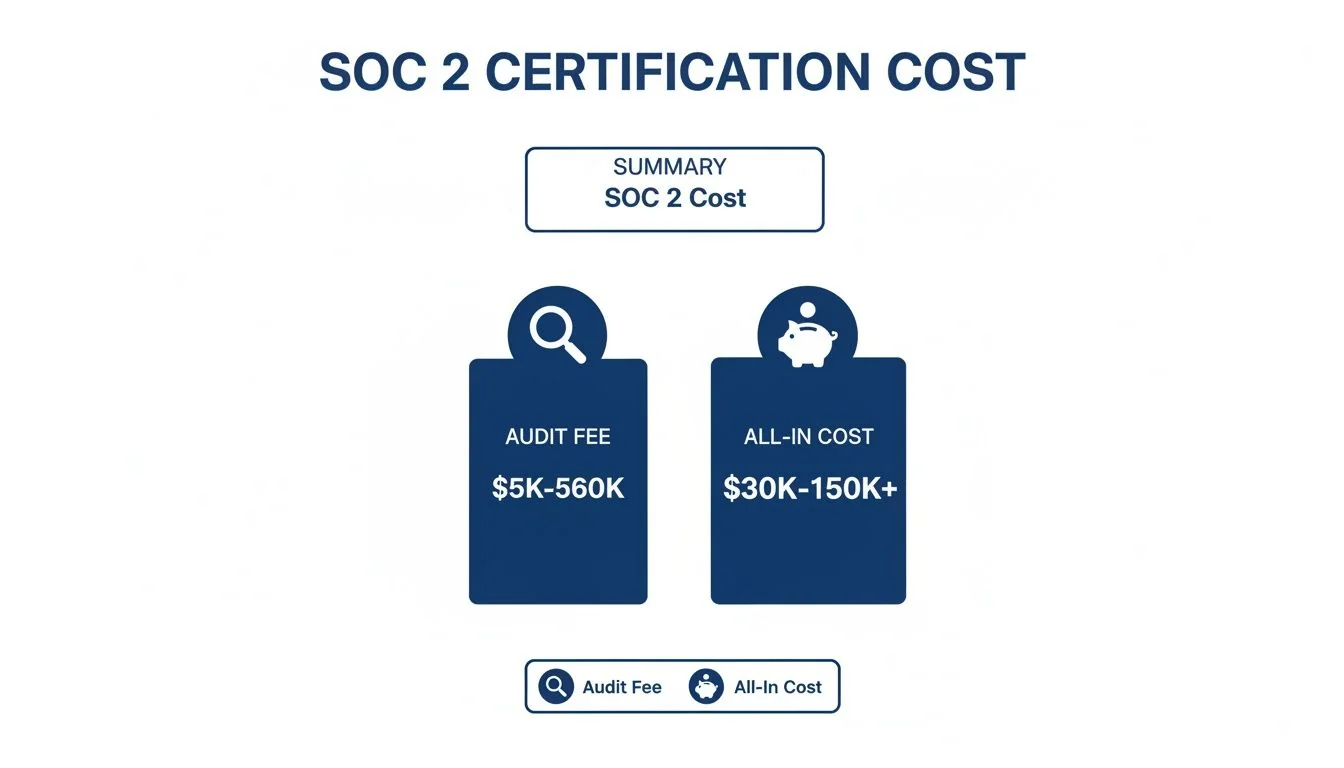
As you can see, the auditor’s bill is just one piece of the puzzle. Readiness, new tools, and your team’s time make up a huge chunk of the real cost.
5. Type and Size of Audit Firm
Who you hire to do the audit matters—a lot. A “Big Four” firm like Deloitte, PwC, EY, or KPMG will have the highest price tag, backed by their global brand name. Frankly, they’re often overkill for a startup.
On the other hand, boutique and mid-size firms that specialize in SOC audits can offer fantastic service at a much more competitive price.
Choosing the right firm is about finding the best fit, not just the lowest price. A firm with deep experience in your industry (like SaaS or FinTech) can perform a more efficient and relevant audit, potentially saving you money in the long run.
6. Number of Physical Locations
If your audit scope needs to cover multiple physical sites, like different data centers or corporate offices, your costs will climb. Auditors have to assess the physical security controls at each location, which often means travel, extra time on-site, and more procedures to run through.
7. Penetration Testing Requirements
While a pen test isn’t technically part of the SOC 2 audit itself, it’s a required control you’ll almost certainly need to satisfy the Security TSC. If you don’t have a recent pen test report on hand, you’ll have to get one done.
This can add anywhere from $5,000 to $30,000+ to your total compliance bill, depending on how big and complex your application is.
Sample SOC 2 Budgets for Different Company Scenarios
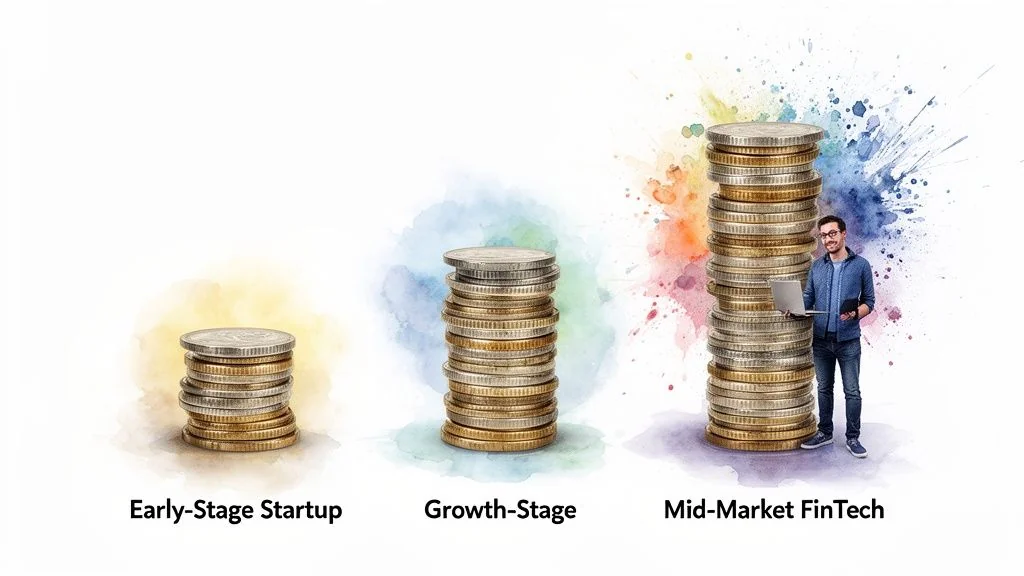
Headline price ranges are a good starting point, but they don’t tell the whole story. To really get a handle on what a SOC 2 audit costs, it helps to see how the numbers play out in the real world.
We’ve sketched out three common company profiles to show you how budgets take shape based on size, complexity, and compliance maturity. See which one feels most like your company to get a much clearer picture of your potential investment.
Scenario 1: Early-Stage SaaS Startup
Picture a 30-person SaaS company. They’re running a simple, single-cloud setup on AWS and need their first SOC 2 Type 1 report to land a big enterprise customer. For now, they only need the Security Trust Services Criterion.
This team’s security program is pretty informal. They have minimal documentation and very few automated controls in place. That means a huge chunk of their initial budget will go toward getting their house in order before the audit even begins.
Their cost breakdown will likely include:
- Readiness Assessment: A consultant is essential to perform a gap analysis and build a remediation roadmap.
- Audit Fee: A boutique audit firm that specializes in startups will be their best bet for a competitive price on a simple Type 1.
- Compliance Automation: A tool like Vanta or Drata isn’t a “nice-to-have”—it’s critical for automating evidence collection.
- Penetration Test: A basic application pen test is needed to satisfy the security criterion.
The goal here is pure and simple: get compliant as fast as possible to unblock that sales pipeline.
Scenario 2: Growth-Stage Tech Company
Now, let’s look at a 150-employee tech company. Their world is more complicated. They use multiple cloud providers like GCP and Azure, have a handful of integrated apps, and are gearing up for a SOC 2 Type 2 audit. This time, they need to cover Security, Availability, and Confidentiality to keep up with customer demands.
While their security program is more established, many of their processes are still manual. Their budget reflects a much larger audit scope, the need for testing over a six-month period, and investment in more serious security tools.
For a growth-stage company, moving from a Type 1 to a Type 2 report is a major financial step. The audit period demands sustained effort, and the expanded scope across three TSCs means way more evidence for the auditor to review. This directly drives up both the audit fee and the internal time suck.
Their budget will allocate more toward the audit itself and the tools needed to manage a growing, complex infrastructure. To see how your specific variables change the numbers, try plugging them into our SOC 2 audit cost calculator.
Scenario 3: Mid-Market FinTech Firm
Finally, imagine a 500-employee FinTech firm. They operate in a highly regulated space with a complex hybrid-cloud environment, multiple physical offices, and a mountain of sensitive financial data. They need a SOC 2 Type 2 report covering all five Trust Services Criteria (Security, Availability, Processing Integrity, Confidentiality, and Privacy).
This organization already has a mature security program, but the compliance bar is sky-high. Their budget is the largest of the three, reflecting the comprehensive scope, the need for a respected mid-tier or large audit firm, and a suite of advanced security and monitoring tools. The audit will be intense, involving on-site visits and a deep dive into every transaction processing control.
For them, this investment isn’t just a sales tool; it’s a regulatory requirement and the only way to give their massive financial partners the assurance they demand.
Sample SOC 2 Budget Breakdown by Company Stage
To bring it all together, this table provides a side-by-side comparison of the estimated costs for each scenario. It clearly shows how the total investment climbs with complexity, scope, and maturity.
| Cost Item | Early-Stage Startup (Type 1) | Growth-Stage Company (Type 2) | Mid-Market Enterprise (Type 2) |
|---|---|---|---|
| Readiness Assessment | $10,000 - $15,000 | $15,000 - $25,000 | $20,000 - $40,000 |
| Audit Fee | $12,000 - $20,000 | $25,000 - $45,000 | $50,000 - $90,000+ |
| Compliance Software | $8,000 - $15,000 | $15,000 - $30,000 | $25,000 - $50,000 |
| Penetration Test | $5,000 - $10,000 | $10,000 - $20,000 | $20,000 - $35,000 |
| Total Estimated Cost | $35,000 - $60,000 | $65,000 - $120,000 | $115,000 - $215,000+ |
As you can see, the final price tag is a blend of audit fees, essential prep work, and the tooling required to get the job done right. These numbers are just estimates, but they provide a realistic baseline for what you can expect to budget.
Uncovering the Hidden Costs of a SOC 2 Audit
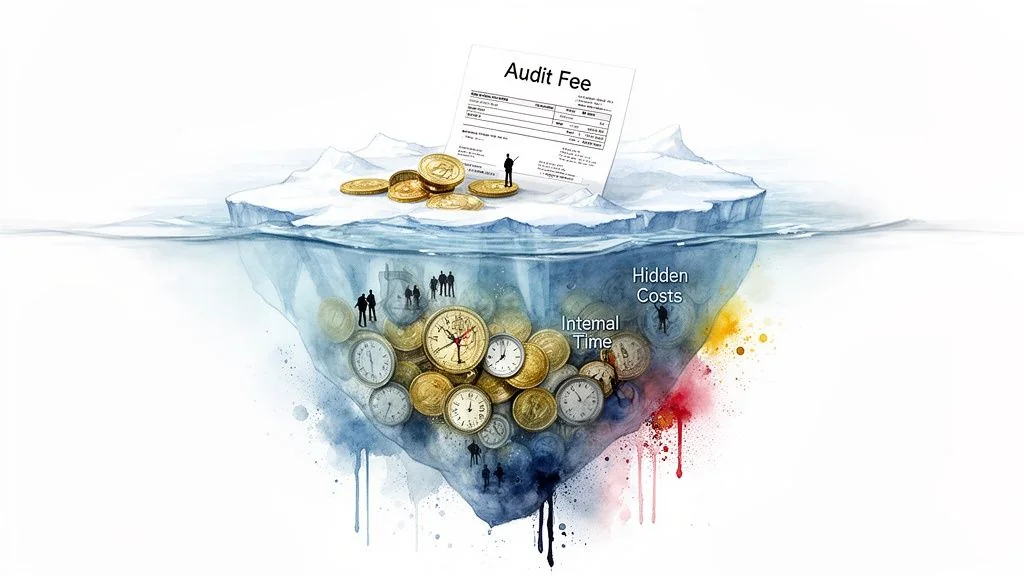
The proposal you get from your auditor is an important number, but it’s just the tip of the iceberg. One of the costliest mistakes a company can make is focusing only on that fee. The real answer to “how much does a SOC 2 audit cost” is hiding beneath the surface, buried in indirect expenses that can easily double or even triple your initial estimate.
These aren’t clean line items on an invoice. They’re woven into your team’s daily work, your tech stack, and your product roadmap. Ignoring them is a recipe for painful financial surprises that can derail the entire audit. Let’s shine a light on the real costs you need to plan for.
The Massive Drain of Internal Team Time
This is, without a doubt, the single most underestimated expense in any SOC 2 journey. You can’t just outsource this process. It demands a huge time commitment from your most valuable—and often highest-paid—people, especially from your engineering, DevOps, and IT teams.
Think about all the hours spent on:
- Endless Meetings: Kicking off the project, slogging through the readiness assessment, and fielding questions from auditors.
- Evidence Collection: The mind-numbing task of hunting down logs, grabbing screenshots, and pulling configurations to prove your controls work.
- Policy Documentation: Writing, reviewing, and getting sign-off on dozens of required security policies.
- Remediation Work: Hitting pause on product development to fix the security gaps you inevitably find.
One analysis suggests a dedicated project lead might spend 50% of their time for six months just on the audit. Once you add up the hours from everyone else involved, this internal time sink can easily translate to $50,000–$75,000 in lost productivity and opportunity cost.
The “time tax” of a SOC 2 audit is immense. It’s not just about paying salaries; it’s about the innovation and product work that doesn’t happen because your key technical staff are buried in compliance tasks.
The Budget for Remediation and New Tools
Your readiness assessment will almost certainly uncover gaps in your security posture. Fixing them costs money. This isn’t a possibility; for any company going through its first audit, it’s a near certainty. And these aren’t optional “nice-to-haves”—they are mandatory fixes you must make to pass the audit.
Remediation costs can include things like:
- New Security Software: You might suddenly need to buy tools for vulnerability management, intrusion detection, or endpoint security.
- Infrastructure Upgrades: This could mean reconfiguring your cloud environment or implementing better logging and monitoring systems you’ve put off.
- Penetration Testing: This is a required control that often comes with its own five-figure price tag if you don’t already have a recent report.
This remediation budget can run anywhere from $5,000 to over $50,000, depending on how mature your security program was to begin with. Failing to budget for these improvements is like planning to build a house but forgetting to budget for the foundation. You can dive deeper into the specific financial impact of a SOC 2 Type 2 audit cost in our detailed guide.
The Recurring Cost of Compliance Automation
To avoid drowning in the manual labor of evidence collection, most modern companies lean on compliance automation platforms. These tools are invaluable. They streamline the whole audit by continuously monitoring your controls and collecting evidence on autopilot.
But these platforms aren’t a one-time purchase. They come with annual subscription fees that become a permanent part of your operational budget. While they deliver a fantastic return on investment by saving hundreds of hours of manual work, their recurring cost—often $5,000 to $30,000 per year—has to be factored into your long-term financial planning.
Smart Strategies to Reduce Your SOC 2 Audit Costs
Knowing what drives your SOC 2 audit cost is a good start, but actively controlling that final number is what really matters. The good news? You don’t have to just accept the first quote that lands in your inbox. With some smart planning, you can bring your total investment down significantly without cutting corners on quality.
These are proven, road-tested methods that all boil down to efficiency and preparation. Get proactive, and you can take financial control of your audit journey from day one.
Right-Size Your Audit Scope
One of the fastest ways to inflate your audit bill is by biting off more than you need to chew. It can be tempting to go after all five Trust Services Criteria (TSCs) to get a “stronger” report, but it’s often an expensive and unnecessary move. The better approach is to let your customers guide you.
Talk to your key customers and prospects. What do they actually need to see? You’ll likely find that most only care about Security. A few might also ask for Availability and Confidentiality. Starting with a focused scope that meets real market demand stops you from paying an auditor to test controls your clients don’t value. You can always add more TSCs in future audit cycles as your business grows.
Invest Heavily in Readiness
Walking into an audit unprepared is like showing up to a marathon with no training—it’s going to be slow, painful, and way more expensive than it needs to be. A thorough readiness assessment isn’t an optional add-on; it’s a critical cost-saving investment. It’s your chance to find and fix control gaps before the auditor starts their clock.
Every single issue an auditor finds during the formal audit kicks off a domino effect of extra work: more questions, more evidence requests, and more re-testing. Each of those cycles adds billable hours and pushes back your report delivery date. Investing upfront in readiness can slash your final audit fees by 15-25% by making the whole process smoother and faster.
A comprehensive cybersecurity audit checklist is a great tool to use here. It helps you proactively prepare, streamline the process, and spot potential issues early, which is a huge factor in reducing costs.
Use Compliance Automation Tools
The biggest hidden cost in any SOC 2 audit isn’t the auditor’s invoice—it’s the hundreds of hours your own team will sink into manually collecting evidence. Think screenshots, log downloads, and organizing endless folders of documentation. This is where compliance automation platforms completely change the game.
Tools like Vanta, Drata, or Secureframe plug directly into your tech stack to automatically and continuously pull the evidence your auditor needs. Yes, they come with a subscription fee, but the return on investment is massive. These platforms can cut down the manual evidence collection effort by over 80%, freeing up your expensive engineering talent to build your product instead of doing compliance busywork.
Bundle Services with Your Auditor
Many CPA firms do more than just SOC 2 audits. They often handle other critical security services, like penetration testing or ISO 27001 certification. If you already know you’ll need a pen test to satisfy the SOC 2 security requirements, ask your potential audit firms if they can bundle it as a package deal.
Bundling can lead to some pretty significant discounts compared to hiring two separate vendors. It also makes your life easier by simplifying vendor management and ensuring the pen test report is exactly what the audit team is looking for, which cuts down on friction and follow-up questions.
Compare Multiple Auditors on a Level Playing Field
Finally, and this is a big one: never, ever settle for the first audit proposal you get. The price for the exact same audit scope can vary by 2-3x between different firms. The gap between a boutique firm that specializes in startups and a big, brand-name auditor can easily be tens of thousands of dollars.
Use a comparison platform to get competitive, transparent bids from several qualified firms. This lets you compare not just the sticker price, but also other vital factors like their experience in your industry, typical timelines, and client satisfaction scores. If you’re a startup, our ranked list of startup-friendly auditors filters out firms that actually work well at your stage. Making auditors compete for your business is the single most effective way to guarantee you get a fair price without sacrificing an ounce of quality.
Finding the Right Auditor at the Right Price
Choosing your SOC 2 auditor is easily the most critical decision you’ll make in this entire process. It’s a choice that directly impacts not just your final bill but your timeline, the stress on your team, and the overall quality of your report.
Think of it like hiring a general contractor for a major home renovation. You wouldn’t just pick the cheapest bid without vetting their experience, seeing their past work, or checking references, right?
Doing the same with your audit is a recipe for disaster. That rock-bottom price often comes with hidden costs: an inexperienced team that needs constant hand-holding, a painful lack of industry knowledge leading to irrelevant evidence requests, or poor communication that creates friction and delays. The right auditor is a partner, not just a vendor.
Beyond the Price Tag: What to Look For
The cost of a SOC 2 audit is important, but it should never be the only factor. A slightly more expensive firm with deep expertise in your industry—like SaaS or FinTech—can ultimately save you thousands by running a more efficient and relevant audit. Their team will actually understand your tech stack and won’t waste your time on controls that don’t apply to your business.
When you’re evaluating potential firms, zoom in on these three areas that matter more than the initial quote:
- Industry Expertise: Have they audited companies like yours before? Do they get your specific operational and security challenges?
- Communication and Fit: Does their communication style work for your team? A good auditor acts more like an advisor, guiding you through the process collaboratively.
- Proven Experience: Can they provide references from similar companies? What do their past clients say about their process and the clarity of their final reports?
Your auditor relationship is built to last for years, especially with annual Type 2 renewals. Choosing a firm that feels like a true partner—one that is responsive, knowledgeable, and easy to work with—is an investment that pays dividends long after the first audit is complete.
How to Confidently Select a SOC 2 Audit Firm
In the past, finding and comparing auditors was a frustrating, opaque process that involved endless sales calls and inconsistent quotes. Thankfully, those days are over. Modern comparison platforms are solving this problem by bringing transparency to the forefront. These services aggregate verified data on dozens of firms, giving you a clear, side-by-side view of your options.
You can instantly compare real price ranges, typical timelines, and satisfaction scores from companies just like yours. This data-driven approach allows you to filter for firms that specialize in your industry and budget, then receive a handful of tailored matches without the spam. To better understand what differentiates various firms and how to evaluate them effectively, our guide on choosing the right SOC 2 audit firm provides a detailed roadmap.
Using these resources transforms a high-stakes guessing game into a structured, informed decision. It empowers you to select a partner confidently, ensuring you don’t overpay for a big brand name or get stuck with an inexperienced auditor who could jeopardize your compliance goals.
Your Top Questions About SOC 2 Costs, Answered
Even after mapping out a budget, you’re bound to have some lingering questions. That’s completely normal. Here are the quick, straight-to-the-point answers to the most common questions we hear from companies just starting their SOC 2 journey.
How Much Will a SOC 2 Audit Cost Us Each Year?
Your first year is always the most expensive, and for good reason. It’s packed with one-time costs like readiness assessments, any major fixes you need to make, and writing all those foundational policies from the ground up.
The good news? Annual renewals are much lighter on the wallet. For a Type 2 report renewal, you can typically expect the auditor’s fee to be about 75-90% of your initial audit cost. The heavy lifting is done; now it’s just about maintaining your controls and having the auditor test them over the new period.
But don’t forget the recurring costs. Your compliance automation software subscription and the time your team spends on this stuff are ongoing expenses that will be a part of your budget every year.
Can We Just Do the SOC 2 Audit Ourselves?
Nope, you absolutely cannot. The entire point of a SOC 2 report is that it’s an independent, third-party attestation. It has to be issued by a licensed Certified Public Accountant (CPA) firm. The value is in that unbiased, external validation of your security program.
Think of it this way: you can’t grade your own homework and expect the teacher to accept it. A self-assessment is a great internal tool, but it holds zero weight with customers. Without an official opinion letter from a licensed CPA firm, it’s not a real SOC 2 report and will get rejected instantly during any serious vendor review.
While your team does all the preparation, the formal audit and the final report must come from a qualified, independent auditor.
How Long Is an Auditor’s Quote Good For?
Most audit proposals have an expiration date, usually somewhere between 30 and 90 days. Auditors don’t do this to pressure you; their pricing is based on a snapshot of your company right now—your current size, scope, and system complexity.
If you wait six months to sign the engagement letter, your company could look very different. You might have hired more people, launched a new product, or expanded your cloud infrastructure. Any of those changes could alter the audit’s scope and, as a result, the price.
Your best bet is to clarify the quote’s expiration date right away and aim to make a decision within that window. It’s the easiest way to lock in the price you were quoted.
Ready to stop guessing and start comparing? SOC2Auditors provides transparent pricing and verified data on over 90 firms. Get three tailored auditor matches in 24 hours and find the right partner at the right price. Get your free auditor matches today.