 Menu
Menu
A SOC 2 readiness assessment is the dress rehearsal before the big show. It’s an evaluation of your internal controls against the AICPA’s Trust Services Criteria, done before your official audit kicks off. This isn’t just about checking boxes; it’s a strategic move to find and fix gaps, ensuring a much smoother and more successful certification journey.
Frankly, it’s the foundation for treating security like the core business function it is.
Frame Your SOC 2 Readiness as a Product Initiative
The old way of thinking about SOC 2 is fundamentally broken. It’s seen as this dreaded, one-off compliance project that everyone just wants to get over with. This approach almost guarantees wasted engineering cycles, a bloated audit scope, and a final report riddled with exceptions nobody wants to explain to a customer.
This reactive mindset treats security as a roadblock, an obstacle to be grudgingly overcome. To do this right, you need a complete mental shift.
Instead of a project with a finite end date, you have to start treating your compliance program as a product. Your security posture, your control environment, and the evidence you generate—these are all features. They need a roadmap, dedicated owners, and a cycle of continuous improvement, just like any other part of your platform. This product mindset transforms the goal from just “passing an audit” to building a sustainable security program that delivers real business value.
This shift in thinking isn’t just a nice idea; it’s the difference between a painful, expensive process and one that actually helps you grow.
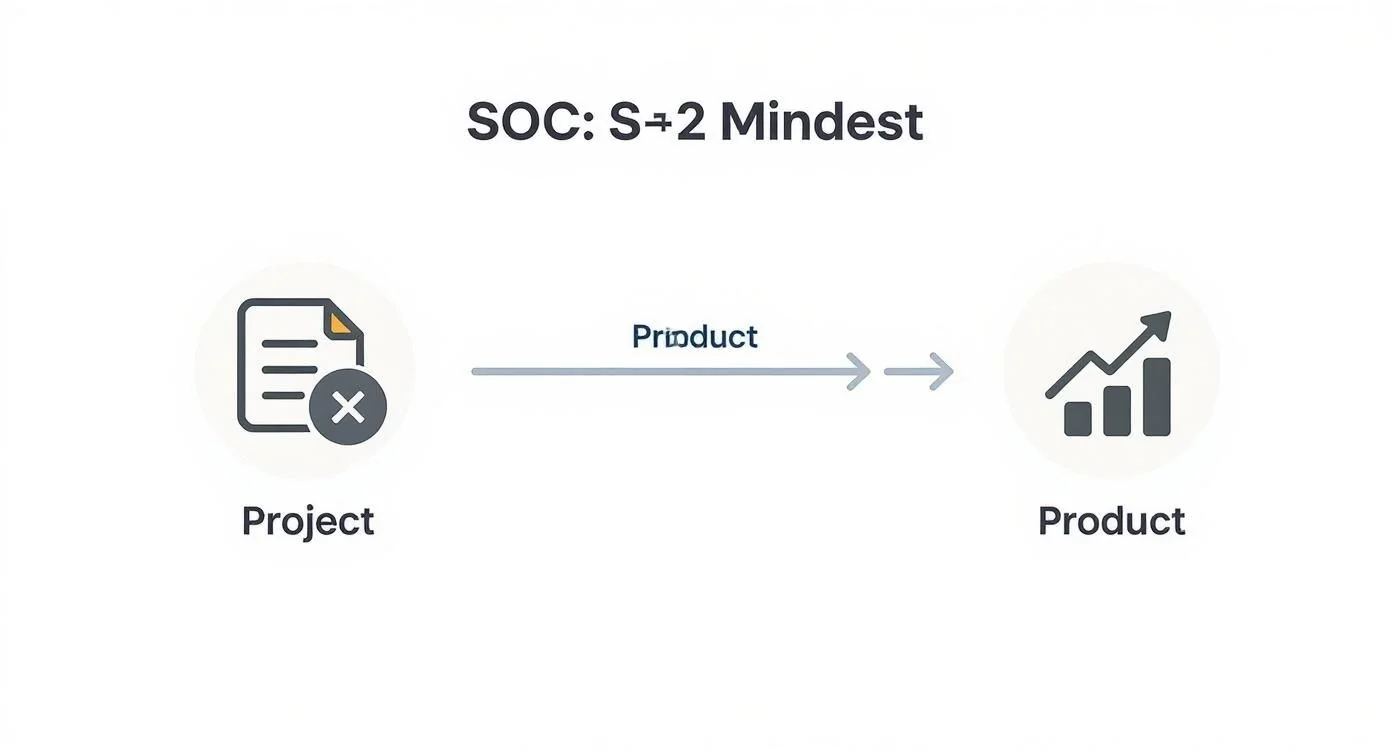
When you adopt this mindset, your security efforts stop being a cost center and become a genuine competitive advantage.
Here’s a clearer look at how these two approaches stack up. The difference is night and day.
SOC 2 Readiness Project vs Product Mindset
| Attribute | Project Mindset (The Old Way) | Product Mindset (The New Way) |
|---|---|---|
| Goal | Pass the audit, get the report. | Build customer trust, accelerate sales. |
| Ownership | An overworked IT manager. | A cross-functional team (Product, Eng, Security). |
| Timeline | A one-time, painful sprint. | A continuous, iterative improvement cycle. |
| Outcome | A static report, often with exceptions. | A living, breathing security program. |
| Tools | Spreadsheets and Google Drive chaos. | Automation platforms (Vanta, Drata), integrated monitoring. |
| Business Impact | A cost center and engineering distraction. | A revenue enabler and customer retention tool. |
Seeing compliance through a product lens changes every decision you make for the better, aligning security directly with business outcomes.
The Business Case for a Product-Driven Approach
This isn’t just theory; the market data makes it clear. A stunning 66% of B2B customers now require and verify SOC 2 compliance before they’ll even consider signing a deal. Companies that nail their certification see, on average, a 30% acceleration in their sales cycles. Even better, their client retention rates often exceed 95%.
Viewing your SOC 2 readiness through a product lens connects your security efforts directly to revenue and customer happiness. You can dig deeper into these SOC 2 business benefits and see how they really impact growth.
The single biggest mistake is treating SOC 2 as an IT project. It’s a business initiative that demonstrates your commitment to protecting customer data. When you frame it as a core product feature, every decision—from scoping to evidence collection—becomes clearer and more effective.
This guide provides a battle-tested framework for running your SOC 2 readiness assessment with this exact product-centric philosophy. By following these steps, you’ll build a robust, auditable security program that doesn’t just satisfy auditors, but also delights your customers and stakeholders.
The result? A clean Type II report in 5-7 months, not the typical 12-18, and spending 40% less than your peers.
Defining Your Scope and Auditing Policy Debt
Before you even think about controls, evidence, or auditors, your SOC 2 readiness assessment has to start with one thing: defining your scope.
Getting this wrong is a huge, unforced error. A vague or bloated scope is the single biggest reason auditors reject initial submissions—some data suggests 60% of first drafts are sent back. That mistake alone can easily add 4–6 months and over $80,000 to your timeline.
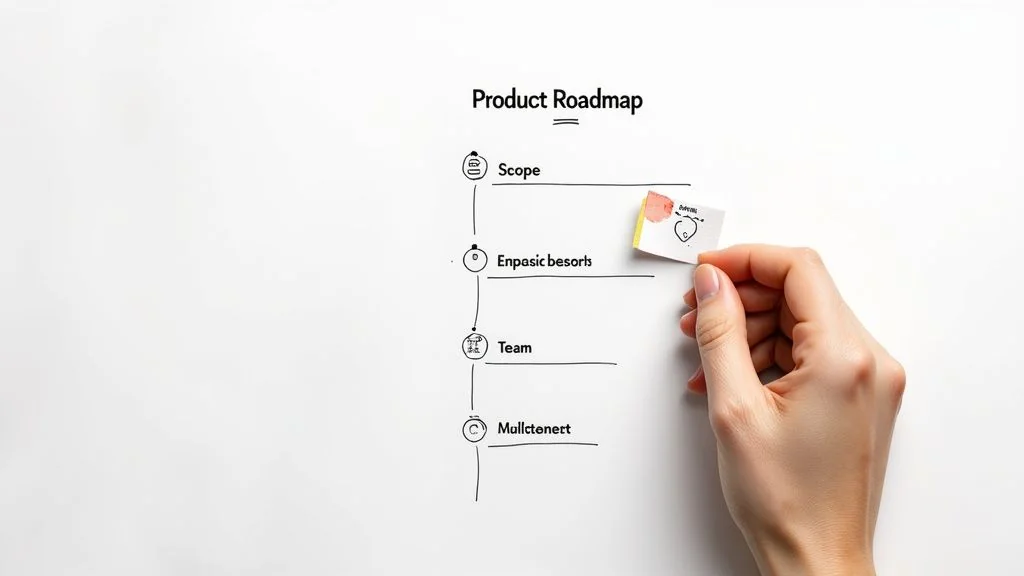
Treat your scope like a product spec, not just a compliance checkbox. The goal is to create a crystal-clear, two-page diagram that explicitly outlines every single in-scope element. This isn’t just a list; it’s a visual contract that defines the boundaries of your entire audit.
Your diagram must nail down:
- Services: Which specific products, features, or platforms are you getting certified? Be exact. “Our flagship SaaS platform” isn’t good enough.
- Locations: What physical offices or data centers are involved?
- Third-Party Dependencies: Which critical vendors handle or process customer data on your behalf? Think AWS, GCP, Stripe, or any key SaaS tools you rely on.
Anything left ambiguous is an open invitation for scope creep and future headaches. Nailing this down in the first week is non-negotiable for an efficient audit.
Uncovering Your Existing Policy Assets
Once your scope is locked, fight the urge to download a folder full of generic policy templates. This is a classic rookie mistake that wastes incredible amounts of time.
Here’s a secret most consultants won’t tell you: most companies already have around 70% of the required policy content. It’s just buried in platforms like Confluence, Google Docs, Notion, or old onboarding documents.
Your next job is to perform a “policy debt” inventory. This just means exporting every single existing policy, procedure, and runbook you can find. Don’t worry about how messy, outdated, or poorly written they are; just get them all in one place.
This process forces you to confront what you actually do, not what a template says you should be doing. It grounds your entire SOC 2 effort in reality from the very beginning.
Mapping Policies to the Trust Services Criteria
With your document dump complete, the real work begins. Now you’ll map each of your existing policies to the 64 Trust Services Criteria (TSC) that are relevant to your scope. Remember, the Security criteria (also known as the Common Criteria) are mandatory, while others like Availability or Confidentiality depend on the promises you make to your customers.
Create a simple spreadsheet with the TSCs as rows and your policies as columns. Go through each criterion and mark which of your documents helps address it, even partially. This process instantly calculates your true policy gaps.
This mapping exercise is a crucial part of any serious SOC 2 readiness assessment. It stops you from wasting hundreds of hours rewriting content you already have.
The output is a clear, data-driven list of the net-new policies you actually need to create. That’s a far more manageable task than starting from a blank page. For a more detailed look at the criteria and requirements, our comprehensive SOC 2 compliance checklist offers a great starting point: https://soc2auditors.org/insights/soc-2-compliance-checklist/
This approach flips the traditional process on its head. Instead of writing policies and hoping they match reality, you start with your operational reality and build compliant policies around it. This saves an immense amount of time and ensures your final documentation accurately reflects how your company really works—something auditors value very highly.
Okay, you’ve defined your scope and taken stock of your existing policies. Now the SOC 2 readiness assessment gets real. We’re moving from theory to execution, transforming that list of Trust Service Criteria into a living, breathing control framework.
This isn’t just another document to stick in a folder. This is your single source of truth for the entire compliance program.
The best way I’ve seen this done—and the way we do it—is by building a master spreadsheet that pulls double duty as a RACI chart and an evidence catalog. This matrix becomes the central nervous system for your audit. It ensures absolutely nothing falls through the cracks.
Anything missing an owner or automated evidence is a guaranteed Type II exception waiting to happen. Clear accountability is non-negotiable.
Turning the TSC Matrix into an Executable Plan
Your control framework spreadsheet needs to be meticulously organized. Think of it as a living document that gives you instant clarity on your progress and, more importantly, your roadblocks.
Get granular. Structure your master spreadsheet with these columns—trust me, you’ll need them all:
- TSC Reference: The specific criterion number (e.g., CC6.1).
- Control Owner: The specific individual responsible. Not a team, a person.
- Evidence Artifact: What is the exact piece of proof? A link to a specific log file, a screenshot of a particular setting, an access review report. Be specific.
- Automation Status: Is this collected manually or automatically? (We’ll get to why this is critical in a second).
- Last Tested Date: When was the last time someone verified this control was actually working?
This structure takes you way beyond a simple checklist. It becomes a powerful management tool that assigns direct ownership and tracks the real-time health of your security program.
The Power of Day-One Automation
Let’s be blunt: Manual evidence collection is a losing game. It’s painfully slow, riddled with human error, and costs 3–5 times more over two audit cycles compared to automating it. In 2025, it’s simply indefensible.
The single biggest lever you can pull during your readiness assessment is automating evidence gathering from day one.
You can—and should—aim to automate 45–55% of your Common Criteria controls right out of the gate. This isn’t some futuristic goal; it’s completely achievable today with a mix of native cloud tools and modern compliance platforms.
Your auditor doesn’t want to see a folder of screenshots you frantically gathered last year. They want to see continuous, immutable proof that your controls are always operating as designed.
SOC 2 can feel overwhelming because it covers so much ground—Security, Availability, Processing Integrity, Confidentiality, and Privacy. Each of these principles branches into numerous criteria that touch your infrastructure, vendors, and internal operations. You can get a deeper dive on navigating these compliance demands on cgcompliance.com.
Implementing Practical Automation Workflows
Getting started with automation is more straightforward than most teams think. The key is to deploy tools that talk to each other and create a seamless evidence pipeline.
Platforms like Vanta or Drata are the “glue.” They integrate directly with your tech stack to continuously monitor your environment and pull in proof of compliance without you lifting a finger.
This screenshot from Vanta’s website shows exactly what I mean. It gives you a real-time dashboard of your security posture.
The dashboard instantly shows what’s passing, what’s failing, and what needs attention, so you know exactly where to focus your remediation efforts.
Here’s a practical, no-fluff stack for automating your key evidence collection:
- Cloud Configuration: Use the tools you already have. AWS Config Rules, GCP Security Command Center, or Azure Policy can automatically flag misconfigurations 24/7.
- Log & Event Collection: Make sure services like AWS CloudTrail are on and piping logs to a central, tamper-proof location. Set it and forget it.
- Patch Management: Integrate your endpoint management tool (like Kandji or Jamf) to provide automated, up-to-the-minute evidence of OS patching.
- Access Reviews: Connect your identity provider (like Okta) to your compliance platform. This automates the collection of access logs and review evidence—a notoriously painful manual task.
- Vendor Risk Data: Use your compliance platform to automatically send, track, and store security questionnaires for all your third-party vendors.
By setting these integrations up early, you build a system that works for you. It frees up your team to focus on actually improving security instead of just chasing down evidence for the auditors. This is how you pass your audit without losing your mind.
Strengthening Your Vulnerability and Access Management
Want to know where most Type II audits go off the rails? Look no further than vulnerability management and user access reviews. These two areas are responsible for a shocking number of exceptions, usually because they’re treated with a “set it and forget it” mindset. A modern SOC 2 readiness assessment, however, demands a much more aggressive and continuous approach.
Recent data is pretty damning: a staggering 40% of SOC 2 exceptions in the last two years came directly from unpatched CVEs or missing penetration tests. This isn’t just a minor compliance checkbox; it’s a massive, flashing warning sign about your core security hygiene. Infrequent, manual scanning just doesn’t cut it anymore.
Make Vulnerability Management Your Top Priority
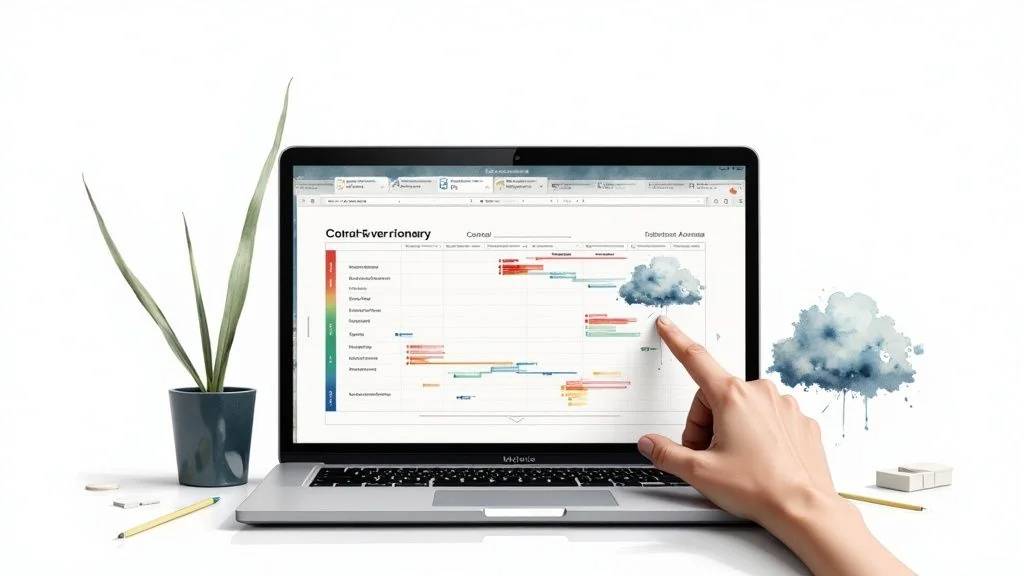
If you want to get ahead of audit exceptions, you need to treat vulnerability management as the single biggest lever in your entire readiness program. That means ditching the reactive posture for a proactive, automated workflow that leaves zero room for human error.
The goal here is a fully automated “ticket-to-remediation” pipeline. Here’s what that looks like in the real world:
- Enforce daily scans across all of your in-scope infrastructure and applications. No exceptions.
- Establish an ironclad SLA of less than seven days for fixing all critical and high-severity vulnerabilities.
- Integrate your scanning tool (like Snyk or Tenable) directly with your ticketing system, like Jira. When a new high-priority finding pops up, it should automatically generate a ticket and assign it to the right engineering team.
This closed-loop system creates an immutable evidence trail. It proves to auditors that you not only find vulnerabilities quickly but also fix them within a defined, aggressive timeframe.
Dismantle the Annual Access Review
Let’s be blunt: the annual access review is a relic. Gathering managers in a room once a year to stare at a giant spreadsheet isn’t just inefficient—it fails to provide the continuous assurance that auditors now expect. People change roles, leave the company, and get temporary permissions all the time. Waiting up to a year to clean this up is a gaping security hole.
The modern solution is to kill this outdated ritual and replace it with a quarterly process that’s supplemented by event-driven reviews. It’s a much more robust model that actually aligns with the speed of business today.
Auditors now expect to see continuous evidence of access control, not a once-a-year spreadsheet party. An event-driven model is the only way to meet this standard and prove your user lifecycle management is truly effective.
Implementing this means you have to get smart with user lifecycle hooks from your identity provider. For example, by using tools like Okta SCIM or monitoring events from your HRIS like Workday, you can build some seriously powerful automations. When an employee is terminated or changes roles, a hook should trigger an immediate, automated de-provisioning workflow that revokes access across all critical systems.
This proactive approach provides auditors with a real-time log of every access change, demonstrating that your controls are working 24/7. This level of rigor is essential for a thorough computer network security audit and is quickly becoming the baseline expectation. By focusing intensely on these two areas, you can eliminate a huge percentage of potential audit exceptions before they ever have a chance to materialize.
Mastering Third-Party Risk and Change Management
Your security is only as strong as your weakest link. And in my experience, that weak link is almost always hiding in one of two places: with your vendors or deep inside your deployment pipeline.
A solid SOC 2 readiness assessment has to go after these two areas aggressively. Think of it this way: third-party risk is about managing external threats, while change management is all about internal discipline. Nail these, and you’re halfway home.
Let’s start with your vendors. Your approach to vendor risk absolutely cannot be reactive. Auditors expect to see a proactive, well-documented process for vetting and continuously monitoring every single third-party service that touches customer data. This isn’t about sending a questionnaire once and calling it a day; it’s about building a robust vendor risk “kill chain” that runs year-round.
If you don’t have up-to-date security questionnaires on file for your top 10 vendors, you’re already behind what auditors will expect in 2025.
Building Your Vendor Risk Kill Chain
This process isn’t just bureaucratic red tape; it’s a clear, repeatable workflow for managing third-party risk from the moment you consider a new vendor to the day you offboard them. It’s your proof that every vendor meets your security standards before they ever touch sensitive data.
Here are the essential stages I recommend:
- Send Questionnaire: Every potential vendor must complete your standardized security questionnaire. No exceptions.
- Risk Score: Based on their answers and the kind of data they’ll access, assign them a risk score—low, medium, high. Keep it simple.
- SLA Review: Scrutinize their Service Level Agreements. You’re looking for firm commitments on security, availability, and, most importantly, breach notifications.
- Flow-Down Clauses: Make sure your contracts include clauses that legally require vendors to stick to your security standards. This is non-negotiable.
- Continuous Monitoring: Set up alerts for any public security incidents involving your key vendors. You want to know about their problems before your customers do.
This structured approach gives auditors a clear trail demonstrating your diligence. It shows you’re protecting customer data even when it’s in someone else’s hands.
Locking Down Change Management
Now, let’s look inward. The single biggest reason fast-moving startups get exceptions on their Type II reports is messy, manual change management.
Relying on “tribal knowledge” or a quick Slack message for approval is indefensible during an audit. Every single change pushed to a production environment must generate an immutable, automated evidence trail.
This is a huge challenge for smaller teams where everyone wears multiple hats. In fact, research shows that 62% of small to medium enterprises struggle to understand SOC 2 requirements precisely because of these resource constraints. If you want to dig deeper, you can learn more about how businesses are navigating SOC 2 challenges on cgcompliance.com.
Manual change evidence is the number one Type II exception in fast-moving startups. The only acceptable solution is an automated, end-to-end workflow that leaves no room for human error or forgotten documentation.
To solve this, you have to lock your deployment process into a system that automatically generates proof. This isn’t about slowing down your developers. It’s about building guardrails that create compliance as a natural byproduct of their everyday workflow. The best evidence chain is one your engineers don’t even have to think about.
A modern, audit-proof workflow should look something like this:
- It all starts with a Jira ticket describing the business need for the change.
- A developer opens a GitHub pull request (PR) and links it directly back to that Jira ticket.
- The PR is configured to require peer review and approval before it can be merged. No cowboy coding.
- Merging the PR automatically kicks off a CodePipeline run (or whatever CI/CD tool you use).
- The deployment itself creates an immutable log entry in AWS CloudTrail.
- Finally, upon a successful deployment, the system auto-closes the original Jira ticket, completing the loop.
This automated chain gives auditors everything they need—the what, why, who, and when for every production change—all without anyone lifting a finger to manually create documentation. It is the only way to prove your controls are operating consistently over time.
Validating Readiness with a Mock Audit
You’ve automated your core controls and shored up your biggest risk areas. Now it’s time to see if your hard work will actually hold up. The only way to know for sure is to run a mandatory Type II mock audit at the 90-day mark.
This step is absolutely non-negotiable. Skipping a dry run is like launching a new product without a single beta tester. You’re just flying blind and hoping for the best, which is a terrible strategy when a clean audit report is on the line.
Engaging an Expert for a Dry Run
I recommend scheduling the mock audit about 90 days before your actual audit period ends. The goal is to hire an ex-Big 4 SOC specialist for a rigorous, three-week dry run. You want someone whose job is to think exactly like your future auditor, requesting evidence and stress-testing your controls against four to six months of real data.
This isn’t a friendly review; it’s a critical pressure test. From what I’ve seen, about 85% of companies discover between 8 and 15 significant control gaps during this phase. These are the kinds of gaps that would have been guaranteed exceptions in the final report. Finding them now saves you from the painful and expensive process of restatement fees, which can easily top $150,000. If you want more guidance on this critical phase, our article on how to prepare for your first SOC 2 audit is a great resource: https://soc2auditors.org/insights/prepare-for-first-soc-2-audit/
Transitioning SOC 2 from a Project to a Program
Here’s the single most important long-term strategy: treat SOC 2 as a continuous program, not a one-time project. The work doesn’t stop when you get the report. That’s actually when the real work of maintaining compliance begins. Companies that disband their teams and declare victory after the first audit have a staggering 70% failure rate in year two.
To avoid this, you need to stand up a permanent “Trust Team.” This doesn’t have to be a massive department; it can be incredibly lean and effective.
A successful Trust Team often consists of 0.5 FTE from security, 0.5 FTE from engineering, and a fractional compliance lead. With an annual budget of around $180–$250k, this team ensures controls are maintained, evidence is continuously collected, and the company is always audit-ready.
This ongoing commitment is especially vital for Type 2 reports, which demand a much longer observation period. SOC 2 Type 2 reports can require 6 to 12 months from start to finish, reflecting the mandatory 3- to 12-month observation window where you must prove your controls are consistently effective.
This programmatic approach turns compliance into a business-as-usual activity. It eliminates the last-minute scramble and builds a sustainable culture of security that auditors love to see. It’s how you not only get your report but keep it, year after year.
Your SOC 2 Readiness Assessment FAQ
Let’s cut through the noise. When you’re staring down the barrel of a SOC 2 audit, a lot of questions come up. Here are the straight-up answers to the ones we hear most often, designed to give you clarity and confidence.
Type I vs. Type II: Which Is Right for a Startup?
Think of a Type I report as a snapshot. It assesses the design of your controls at a single moment in time. It’s the faster, cheaper option, and it can be a good first step if you need to satisfy an early customer request to check a box.
But let’s be real: most enterprise clients will immediately ask for a Type II.
A Type II report assesses the operating effectiveness of your controls over a period of time, usually between 3-12 months. This is the gold standard. It’s the report that proves your security program actually works day in and day out, not just on paper.
Our advice: Only go for a Type I if a critical deal is completely blocked and you need a report right now. For everyone else, you should be planning for a Type II from the very beginning. It shows a much more mature security posture and is what the market truly values.
Are Automation Platforms Like Vanta or Drata Required?
No, they aren’t technically required. You can absolutely get through a SOC 2 audit with a mountain of spreadsheets and a manual evidence collection process. But here in 2025, that approach is just indefensible from both a cost and risk perspective.
These platforms automate a huge chunk of your evidence collection—often 45-55% of the Common Criteria—from day one. They provide the continuous monitoring that auditors love to see and drastically cut down the engineering hours you’d otherwise spend chasing down screenshots and pulling logs.
While there’s an upfront cost, the ROI is crystal clear. Manual evidence collection costs 3-5 times more when you factor in employee time over just two audit cycles.
What Is a Realistic Timeline and Budget for a Mid-Market Company?
Every company’s journey is a bit different, but you absolutely need to go in with a realistic financial and time commitment. For a mid-market tech firm tackling a Type II for the first time, this is a marathon, not a sprint. The observation period alone sets a minimum timeline before you even get to the formal audit.
Here’s a look at what a typical journey might involve.
Estimated SOC 2 Readiness Timeline and Costs
This table breaks down the common phases, timelines, and costs for a mid-market tech company pursuing its first SOC 2 Type II certification. Keep in mind that remediation costs are highly variable and depend on the gaps you find.
| Phase | Typical Duration | Estimated Cost (Software + Services) |
|---|---|---|
| Readiness Assessment & Gap Analysis | 4–6 weeks | $15,000 – $25,000 |
| Remediation & Control Implementation | 8–12 weeks | Varies (Internal engineering cost) |
| Type II Observation Period | 6–12 months | $20,000 – $40,000 (Automation Platform) |
| Mock Audit & Final Prep | 2–3 weeks | $10,000 – $18,000 |
| Formal Audit & Report Issuance | 4–8 weeks | $25,000 – $60,000+ |
| Total Estimated Investment | 9–15 months | $70,000 – $143,000+ |
As you can see, the total investment is significant, making it all the more important to get the process right from the start, especially when it comes to choosing your partners.
Finding the right auditor is a critical step in your SOC 2 journey. At SOC2Auditors, we replace endless sales calls with a data-driven matching platform, connecting you with vetted firms that fit your timeline, budget, and industry. Get your three tailored auditor matches.