 Menu
Menu
A System and Organization Controls (SOC) 2 report is an attestation engagement performed by an independent Certified Public Accountant (CPA) firm. It evaluates a service organization’s controls over one or more of the five Trust Services Criteria (TSC): Security, Availability, Processing Integrity, Confidentiality, and Privacy. The purpose is to provide assurance to a user entity’s management, regulators, and other stakeholders that the service organization has designed and implemented effective controls relevant to the security, availability, or processing integrity of the system used to process users’ data or the confidentiality or privacy of the information processed by the system.
What is SOC 2 in the Government Contracting World?

For a government contractor, a SOC 2 report serves as independent, third-party validation that the systems and processes used to deliver services are designed and operating effectively to meet specific security, confidentiality, availability, processing integrity, or privacy commitments. It provides tangible evidence to prime contractors and federal agencies that an organization has a mature security program capable of protecting sensitive information. While not a direct federal mandate, it is increasingly used as a contractual requirement to demonstrate due diligence and manage supply chain risk, especially when handling data such as Controlled Unclassified Information (CUI).
Understanding the Trust Services Criteria
The SOC 2 framework is built on five distinct criteria defined by the AICPA. An audit will always include Security, but the other TSCs are selected based on the specific service commitments and contractual obligations an organization has made to its customers.
- Security (The “Common Criteria”): This is the mandatory foundation for every SOC 2 report. It verifies that information and systems are protected against unauthorized access, unauthorized disclosure of information, and damage to systems that could compromise the availability, integrity, confidentiality, and privacy of information or systems. Specific controls within this category, such as CC6.1 (Logical Access), require the entity to implement logical access security measures to protect against threats.
- Availability: This criterion addresses whether the system is available for operation and use as committed or agreed. If a contract with a government agency includes a Service Level Agreement (SLA) specifying uptime, this TSC provides assurance that controls for capacity management, system monitoring, and disaster recovery are in place and effective.
- Processing Integrity: This focuses on whether system processing is complete, valid, accurate, timely, and authorized. For contractors providing services involving financial transactions, data transformation, or critical calculations, this TSC validates that controls prevent errors or incorrect data processing.
- Confidentiality: This criterion addresses the protection of information designated as “confidential” from unauthorized disclosure. For government contractors, this is critical for protecting CUI, contract details, or other sensitive but unclassified (SBU) data, as required by control C1.2, which mandates the entity to identify and maintain the protection of confidential information.
- Privacy: Distinct from Confidentiality, this criterion addresses the collection, use, retention, disclosure, and disposal of personal information (PII) in conformity with the entity’s privacy notice and with criteria set forth in the AICPA’s Generally Accepted Privacy Principles (GAPP).
Why This Matters for a SOC 2 Audit
Selecting the correct Trust Services Criteria is a foundational step in preparing for a SOC 2 audit. The choice of TSCs directly defines the scope of the audit and the specific controls that will be tested. For a government contractor, if your service agreement promises 99.9% uptime, the Availability TSC is not optional; it is essential to demonstrate that you have controls in place to meet this commitment. Similarly, if you process or store CUI, including the Confidentiality TSC is necessary to prove you have implemented specific controls to protect that data from unauthorized disclosure. A failure to align the selected TSCs with your contractual obligations will result in an audit report that is irrelevant and fails to provide the required assurance to your government partners, undermining the entire purpose of the engagement.
Why SOC 2 Is Becoming a Must-Have for Contractors
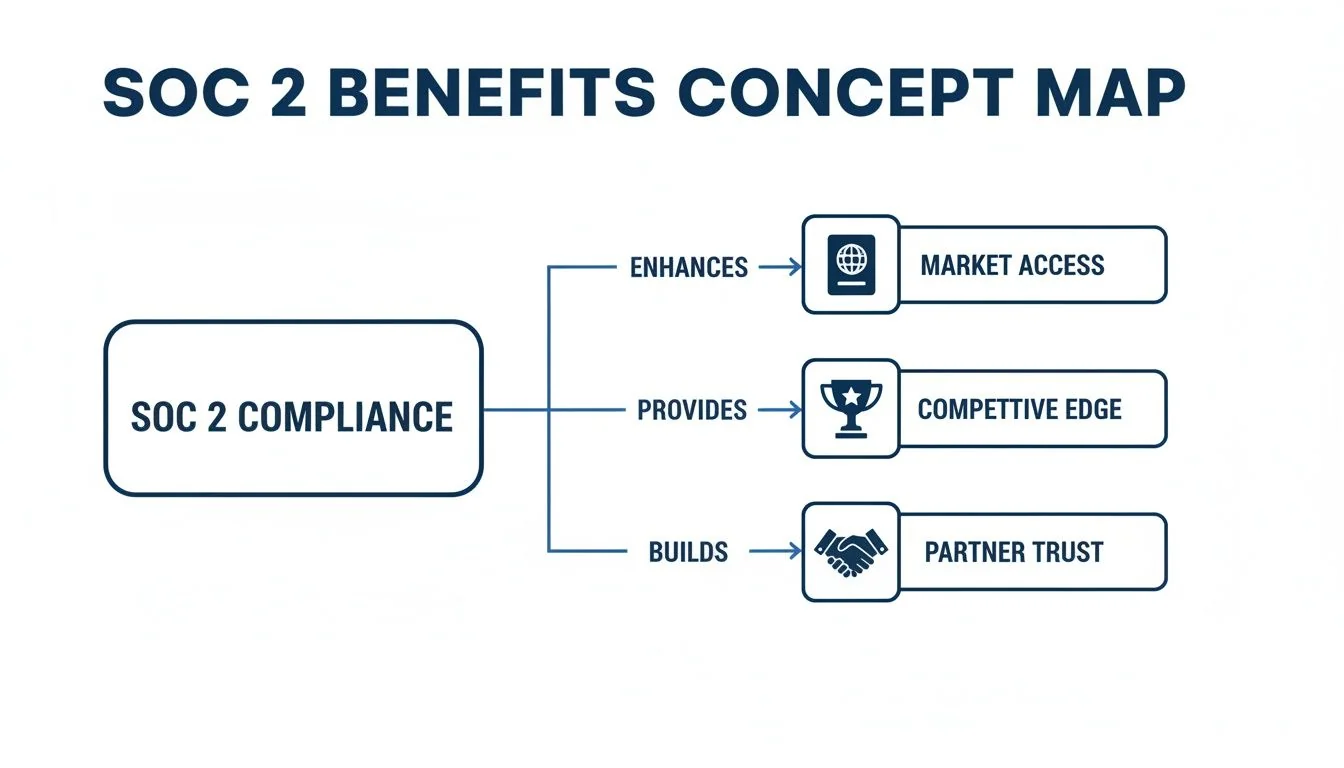
While frameworks like the Cybersecurity Maturity Model Certification (CMMC) are direct federal mandates, SOC 2 serves as a powerful, market-driven requirement that differentiates successful government contractors. Prime contractors, responsible for the security of their entire supply chain, increasingly flow down security requirements to their subcontractors. A SOC 2 report is the most widely accepted commercial attestation for a subcontractor to demonstrate a mature, validated security program, making it an essential tool for market access and competitiveness.
The Shift from Optional to Essential
SOC 2 has transitioned from a competitive advantage to a baseline requirement for doing business in the federal space. Federal agencies and prime contractors now frequently use a SOC 2 report as a key component of their vendor risk management programs, effectively filtering out any organization that cannot provide this independent attestation of their control environment. This shift is driven by the need for verifiable proof of security, rather than relying on self-attestations or questionnaires.
Why This Matters for a SOC 2 Audit
From a SOC 2 perspective, this market trend directly impacts the business case for the audit itself. Pursuing a SOC 2 report is no longer just about compliance; it is a strategic investment in market access. For an organization preparing for a SOC 2 audit, this means the goal is not merely to “pass” but to produce a high-quality, “clean” report with no exceptions that can be used as a sales and trust-building tool. This report serves as pre-vetted evidence that you meet the security expectations of both commercial and public sector clients. Contractors involved in complex work, like implementing public sector IT modernization strategies, find that a SOC 2 report is a prerequisite for being considered for such critical projects. The audit readiness process, therefore, becomes a direct measure of your organization’s readiness to compete for and win valuable government contracts.
How SOC 2 Controls Map to Federal Frameworks
A well-architected SOC 2 compliance program provides a significant advantage for meeting federal compliance requirements like CMMC, which is based on NIST SP 800-171. Instead of managing separate compliance initiatives, organizations can build a unified control framework that satisfies both commercial (SOC 2) and federal (CMMC) obligations. This mapping strategy maximizes the return on compliance investment by allowing evidence collected for a SOC 2 audit to be reused to demonstrate adherence to federal standards.
The Power of Control Mapping
The SOC 2 framework was designed by the AICPA to be flexible and align with other established standards, including the 17 principles from the 2013 COSO framework for internal controls. This inherent compatibility is what enables effective mapping from SOC 2’s Trust Services Criteria to the control families and practices found in NIST SP 800-171 and, by extension, CMMC Level 2. For instance, the evidence collected to satisfy SOC 2’s CC6 series on logical and physical access controls—such as user access reviews, multi-factor authentication logs, and role-based access policies—can be directly used to demonstrate compliance with the CMMC Access Control (AC) domain.
Why This Matters for a SOC 2 Audit
For an organization pursuing SOC 2, understanding this overlap is critical for efficient audit preparation. It means that as you design, implement, and test controls for your SOC 2 audit, you can simultaneously be building the evidence portfolio required for CMMC. This unified approach prevents duplicated effort and ensures consistency across your compliance programs. The table below illustrates this synergy with specific examples.
SOC 2 and CMMC Level 2 Control Overlap
| SOC 2 Trust Services Criteria (Example Control) | Corresponding CMMC Level 2 Practice (NIST SP 800-171) | Why This Matters for Your SOC 2 Audit |
|---|---|---|
| CC6.1: Implement logical access security software, infrastructure, and architectures. | AC.L2-3.1.2: Limit information system access to authorized users. | The evidence you gather for your SOC 2 audit on user provisioning, role-based access, and access reviews directly satisfies a core CMMC requirement for protecting CUI. |
| CC7.2: The entity monitors system components and the operation of those components for anomalies that are indicative of malicious acts… | SI.L2-3.14.7: Identify unauthorized use of the information system. | Your SOC 2 evidence of security information and event management (SIEM) logs, intrusion detection system alerts, and SOC analyst reviews demonstrates compliance with CMMC’s system integrity and monitoring requirements. |
| CC3.2: The entity identifies risks to the achievement of its objectives…and analyzes risks as a basis for determining how the risks should be managed. | RA.L2-3.11.1: Periodically assess the risk to organizational operations (including mission, functions, image, or reputation), organizational assets, and individuals… | The documented risk assessment you must produce for a SOC 2 audit forms the foundation for the risk assessment required by CMMC, allowing you to leverage the same process and documentation for both. |
While SOC 2 and frameworks like FedRAMP serve different ultimate goals, understanding their similarities is key to an efficient compliance strategy. You can learn more about how SOC 2 compares to FedRAMP in our detailed guide. By building controls with both SOC 2 criteria and NIST/CMMC requirements in mind, your SOC 2 audit preparation becomes a direct and measurable step toward achieving comprehensive federal compliance.
Scoping Your SOC 2 Audit for Government Contracts

Properly defining the scope of a SOC 2 audit is the most critical factor for success, particularly for government contractors. Scoping involves establishing a precise boundary around the system—including the infrastructure, software, people, data, and processes—that an auditor will evaluate. For contractors handling federal data, this boundary must thoughtfully encompass all components involved in processing or storing sensitive information like Controlled Unclassified Information (CUI). A scope that is too narrow will produce a report that fails to provide assurance over the relevant services, while a scope that is too broad will make the audit unnecessarily complex, costly, and time-consuming.
Defining Your System Boundaries
Your “system” in the context of a SOC 2 audit is the complete ecosystem required to deliver your contracted service. The system description, a key part of the final SOC 2 report, must detail all components within the audit boundary:
- Infrastructure: The cloud environments (e.g., AWS GovCloud), data centers, networks, and servers supporting the service.
- Software: The applications, databases, and underlying code that constitute the service.
- People: The specific roles and functions (e.g., engineering, security operations, customer support) with access to the system and its data.
- Data: The types of information processed, stored, or transmitted by the system, with explicit mention of sensitive government data like CUI or Personally Identifiable Information (PII).
- Processes: The key operational procedures and controls governing the system, such as incident response, change management, and risk assessment.
Selecting the Right Trust Services Criteria
While the Security TSC is mandatory, the selection of additional criteria (Availability, Processing Integrity, Confidentiality, Privacy) must be driven by your contractual commitments to government clients. These choices dictate the specific controls to be audited. If your contract includes an SLA for uptime, you must include the Availability TSC. If you handle any information designated as confidential, such as CUI, the Confidentiality TSC is non-negotiable. For instance, Confidentiality criterion C1.1 requires the entity to identify and maintain the confidentiality of information, a control that directly addresses the handling of sensitive government data.
Why This Matters for a SOC 2 Audit
From a SOC 2 compliance perspective, a well-defined scope is the blueprint for the entire audit. It ensures that your team’s efforts and resources are focused on implementing and gathering evidence for only the controls that are relevant to your service commitments. It prevents “scope creep,” which can derail an audit, and ensures the final report is a credible, useful asset for demonstrating compliance to government agencies and prime contractors. As you discover more insights about SOC 2 trends on konfirmity.com, market data shows a significant increase in reports including Confidentiality and Availability, reflecting customer demands for greater assurance over these areas—a trend especially pronounced in the federal sector. A properly scoped audit is the first and most important step toward producing a report that proves you can be trusted with mission-critical systems and data.
Choosing the Right Auditor for Federal Compliance
Selecting a SOC 2 auditor is a strategic decision that significantly impacts the credibility and utility of the final report, especially for government contractors. The auditor must be a licensed CPA firm, but for federal work, you need a partner with deep expertise in the government compliance landscape. A generic auditor may understand AICPA standards but lack the contextual knowledge of federal frameworks like CMMC and NIST SP 800-171, leading to an audit that fails to address the specific concerns of federal agencies and prime contractors.
What to Look for in a SOC 2 Auditor
Your ideal auditor must be fluent in the language and requirements of the Defense Industrial Base (DIB). They need demonstrable experience helping contractors map SOC 2 controls to federal requirements, ensuring that the audit process is efficient and the resulting report is fit for its intended purpose.
Actionable evaluation criteria include:
- Federal Framework Familiarity: Ask the firm to describe their methodology for testing controls that have overlapping requirements between SOC 2 and NIST SP 800-171. A knowledgeable firm will have a clear, established process.
- DIB Client Experience: Request anonymized case studies or references from other government contractors they have audited. This verifies their understanding of the unique operational and security challenges in the federal space.
- Integrated Audit Approach: An experienced firm will offer guidance on how to leverage the evidence gathered for your SOC 2 audit to satisfy CMMC practices, saving significant time and resources. Understanding the general steps in a cybersecurity audit process will help you assess if their approach is efficient.
For example, ask a potential auditor: “Can you walk us through how you would test control CC6.1 (Logical Access) in a way that also provides evidence for CMMC practice AC.L2-3.1.2 (Limit system access to authorized users)?” A strong answer will detail specific evidence requests, such as reviewing system configurations for role-based access control (RBAC) and examining logs for periodic user access reviews.
Why This Matters for a SOC 2 Audit
Choosing an auditor with specific government contracting expertise is fundamental to SOC 2 audit readiness. This choice directly affects the audit’s efficiency and outcome. An experienced auditor will provide valuable insights during the readiness phase, helping you identify and remediate gaps that are specific to federal requirements. They will conduct testing in a way that aligns with both AICPA standards and federal expectations, resulting in a defensible report that withstands scrutiny from procurement officers and prime contractors. A generic auditor, in contrast, may issue a clean report that is ultimately rejected by your government partners for failing to address their specific risk concerns. For a more structured way to compare your options, you might want to check out our guide on selecting top SOC 2 audit firms.
Common Pitfalls Government Contractors Face
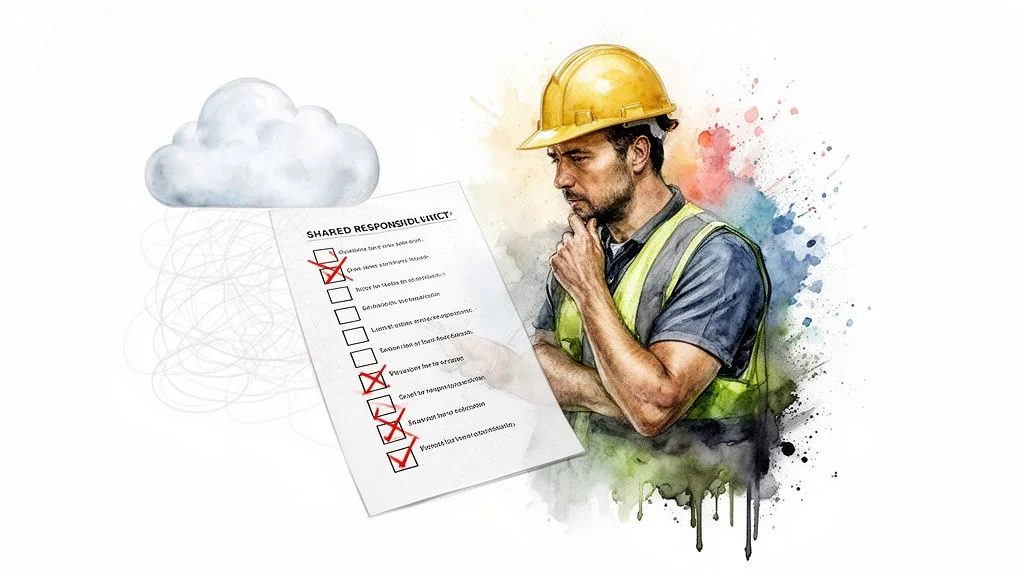
Government contractors pursuing a SOC 2 report often encounter specific pitfalls that can lead to audit failures or a qualified opinion. These errors typically stem from underestimating the heightened security expectations associated with federal contracts and failing to tailor the SOC 2 implementation to that specific context. One of the most prevalent mistakes is a misunderstanding of the shared responsibility model in cloud environments like AWS GovCloud. Contractors incorrectly assume their cloud service provider’s compliance certification covers their own responsibilities, when in fact they are fully responsible for configuring and securing the services they use within that environment.
Forgetting the “Government-Specific” Context
A critical error is using generic, off-the-shelf policies and risk assessments that ignore the unique requirements of government contracting. Your risk assessment, for example, must explicitly consider threats related to handling CUI and operating within the Defense Industrial Base (DIB). Your incident response plan must incorporate the strict reporting timelines and procedures mandated by government contracts (e.g., DFARS 252.204-7012). The AICPA’s Trust Services Criteria are intentionally broad, but your implementation must be specific. For example, CC3.1 (Risk Assessment) requires the entity to consider “the potential for fraud,” but for a government contractor, this must be expanded to include risks specific to federal programs and data handling.
Underestimating Evidence Requirements
Many contractors fail to appreciate the depth and quality of evidence an auditor will require to verify that controls are operating effectively over time. Simply stating that a control is in place is insufficient. Auditors require tangible proof. This means providing complete, consistent, and well-organized evidence for continuous monitoring activities, such as:
- Log Files: Evidence that security logs from critical systems are being collected, reviewed for anomalies by qualified personnel on a defined schedule, and retained for the required period.
- Vulnerability Scan Reports: Complete reports from regular vulnerability scans, accompanied by ticketing system records showing that identified vulnerabilities are tracked, prioritized, and remediated within policy-defined timelines.
- Access Review Records: Signed and dated documentation from quarterly or semi-annual user access reviews for key systems, demonstrating that all user accounts and permissions were reviewed and validated by management.
Why This Matters for a SOC 2 Audit
Avoiding these pitfalls is essential for a successful SOC 2 audit. From a compliance perspective, readiness requires moving beyond generic templates and meticulously tailoring your control environment to the specific risks and requirements of your federal contracts. This means fully documenting your responsibilities within the cloud shared responsibility model, performing a context-aware risk assessment, and establishing rigorous processes for evidence collection. This proactive and detailed approach ensures that when the audit begins, you have a complete and defensible body of evidence demonstrating that your controls are designed appropriately and operating effectively, ready to withstand the scrutiny of both your auditor and your government clients.
Connecting SOC 2 Compliance to Audit Readiness
Achieving SOC 2 audit readiness is the culmination of a disciplined, ongoing compliance program, not a one-time project. For a government contractor, being “audit-ready” means maintaining a state of continuous compliance where security controls are not only implemented but are also consistently monitored, tested, and documented in alignment with both the AICPA’s Trust Services Criteria and federal requirements. This state of perpetual readiness ensures that the audit itself is a smooth validation of existing practices rather than a frantic, last-minute effort.
The cycle of readiness begins with a risk assessment tailored to your government contracts, which informs the design and implementation of specific controls. This is followed by the continuous collection of evidence to prove those controls are operating effectively. This process directly addresses specific SOC 2 criteria. For instance, your routine vulnerability scanning and patching activities provide the evidence needed to satisfy CC7.1 (System and Information Integrity), while your documented employee security training program addresses CC1.2 (Control Environment).
From a SOC 2 compliance perspective, this continuous loop of risk assessment, control implementation, and evidence collection is the very definition of a mature security program. It transforms compliance from a burdensome cost center into a strategic asset. By embedding SOC 2 requirements into daily operations, you ensure that your organization is always prepared to demonstrate its security posture. This state of audit readiness not only de-risks the audit engagement but also serves as powerful, ongoing proof to prime contractors and government agencies that you are a secure, reliable, and low-risk partner, thereby strengthening your ability to win and retain federal contracts.
Finding an auditor who understands the nuances of federal compliance is critical. SOC2Auditors helps you connect with CPA firms that specialize in the government contracting space. Compare verified pricing, timelines, and client satisfaction to find the right partner without the sales calls. Get your free, data-driven auditor matches at https://soc2auditors.org.